Kanchanara 9pcv2mb65y8 unsplash

Solana Price: What’s Actually Moving the Needle in 2026

If you’ve been staring at charts trying to figure out the solana price, you’re definitely not alone. The market has been a wild ride, and everyone from retail traders to big institutional players is trying to decode the next move.

Understanding the Current Solana Price Dynamics

Let’s cut through the noise. The SOL token value isn’t just bouncing around randomly; it’s reacting to a mix of macroeconomic shifts and genuine network growth. Crypto market trends 2026 are showing a clear divergence: projects with actual utility are holding ground, while hype-driven assets bleed out. Solana’s blockchain scalability has been a massive factor here, processing thousands of transactions per second without the network choking—a stark contrast to the congestion we saw in previous years.

What Drives the SOL Token Value in 2026?

Institutional money is no longer just a buzzword; it’s the main engine. Following the official listing of the Bitwise Solana ETF (BSOL) on the New York Stock Exchange, traditional finance finally got a regulated gateway to get exposure without dealing with clunky self-custody setups. When you look at a SOL price prediction from major analysts, the consensus leans toward steady accumulation rather than overnight moonshots. In fact, some institutional forecasts still point to aggressive long-term targets despite short-term macro headwinds (source).

Network Upgrades and Institutional Adoption

Here is a quick breakdown of why the fundamentals still matter when you decide to buy Solana:
Metric
Current State (2026)
Impact on Value
Transaction Speed
~3,000+ TPS sustained
Keeps Solana decentralized finance projects viable and cheap.
Institutional Inflows
Growing via U.S. ETF products
Provides a reliable price floor during retail sell-offs.
Network Downtime
Near zero (post-upgrade stability)
Restores trust among institutional cyrpto investors.

Regional Trends: USA and EU Market Influence

The regulatory landscape in the USA and EU is finally maturing. While the EU has been rolling out MiCA frameworks that provide clear rules for digital assets, the U.S. has seen a surge in spot product approvals. For instance, 21shares expanded its U.S. product lineup by launching a dedicated Solana ETF, signaling deep institutional confidence in the asset class (press release). This regional demand creates a unique support level that simply wasn’t there during the last bear market.
“The ingredients are all there for Solana to soar, driven by real yield and institutional infrastructure, not just retail FOMO.” – Bitwise Market Insights.

Navigating Volatility: A Realistic Outlook

Don’t expect a straight line up. Any serious analsyis of the market shows that pullbacks are healthy and expected.
  • Watch the ETF flows: Daily net inflows or outflows are the new on-chain metric to monitor.
  • Developer activity: The number of active builds in the ecosystem directly correlates to long-term token demand.
  • Macro factors: Federal Reserve rate decisions still ripple through the entire digital asset class.
The key is to ignore the daily noise and focus on the structural shifts happening beneath the surface.

The Growing Role of Cryptocurrency Payment Processing: A Comprehensive Overview

Cryptocurrency has evolved from a niche financial experiment into a globally recognized asset class with significant use cases. One of the most impactful developments in recent years has been the rise of cryptocurrency payment processing. This new frontier is transforming the way businesses and consumers interact with money. It offers benefits such as lower transaction costs, faster cross-border payments, and a more inclusive financial system.

In this article, we will explore the growing importance of cryptocurrency payment processing, how it works, and the potential it holds for businesses in the modern economy.

What is Cryptocurrency Payment Processing?

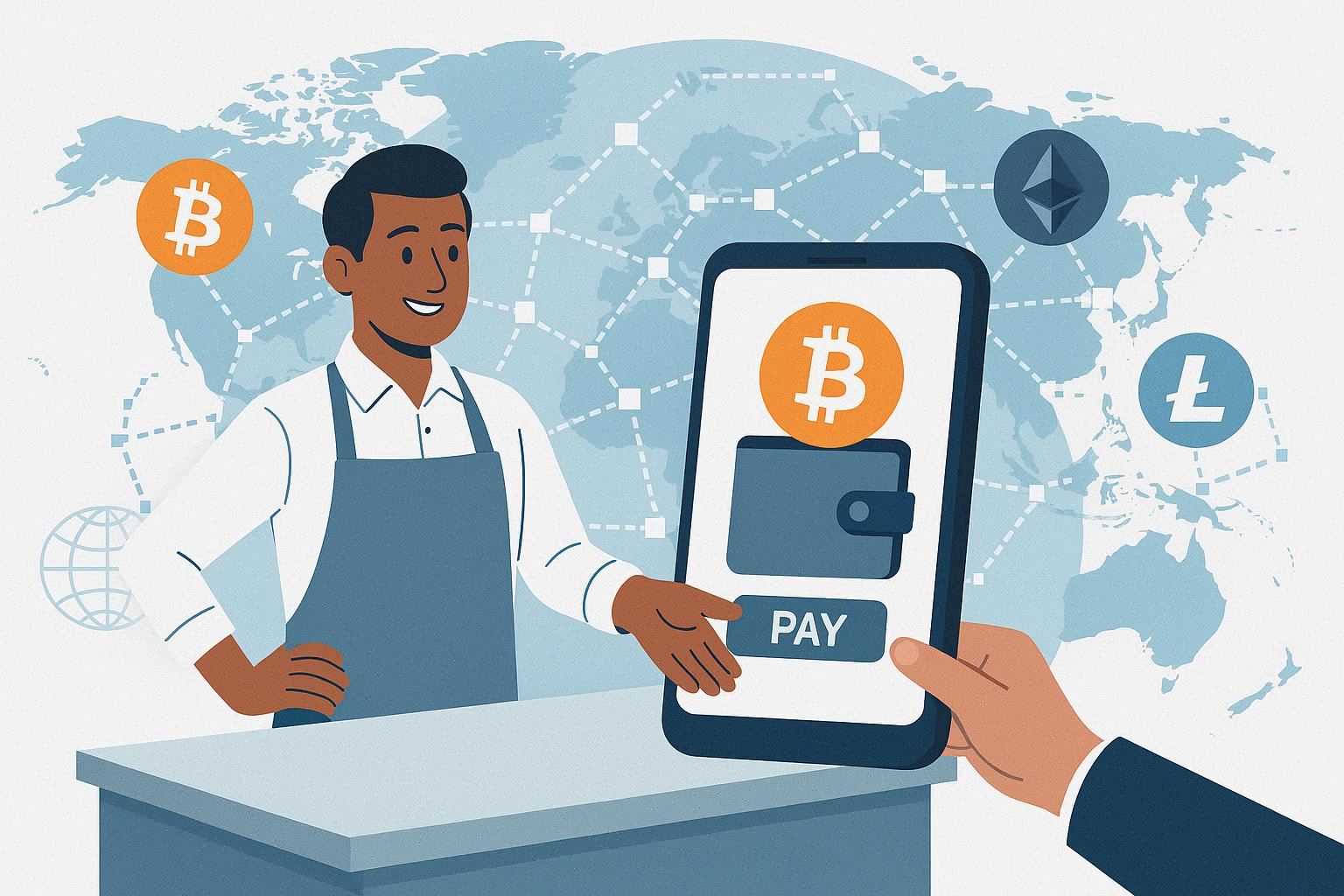
At its core, cryptocurrency payment processing enables businesses to accept digital currencies as a form of payment for goods and services. Instead of traditional methods like credit or debit cards, bank transfers, or cash, cryptocurrency payments rely on blockchain technology to facilitate transactions. Popular cryptocurrencies, including Bitcoin, Ethereum, and Litecoin, can be used to make payments directly from one party to another, without intermediaries like banks.

A cryptocurrency payment processor acts as an intermediary between the customer and the merchant, providing the necessary infrastructure to accept, convert, and manage cryptocurrency payments. This service simplifies the complexities of accepting digital currencies, allowing businesses to seamlessly integrate cryptocurrency transactions into their existing payment systems.

How Does Cryptocurrency Payment Processing Work?

The process of cryptocurrency payment processing involves several key steps, which, though technical, are becoming easier to manage with the advent of sophisticated tools and services. Here’s a breakdown of how it works:

  1. Customer Makes a Payment:
    The first step is when a customer chooses to pay with cryptocurrency. They can do so by scanning a QR code generated by the merchant’s payment system or entering the wallet address manually. The customer’s wallet then sends the designated cryptocurrency to the merchant’s wallet address.

  2. Payment Verification:
    Once the transaction is initiated, it enters the blockchain network for verification. Blockchain is a decentralized ledger that records transactions in a secure and immutable way. Each cryptocurrency has its own blockchain, such as the Bitcoin blockchain or the Ethereum blockchain. These networks use mining or staking mechanisms to validate transactions, ensuring that they are legitimate and preventing double spending.

  3. Processing the Payment:
    After verification, the payment is processed by the payment processor. The processor typically converts the cryptocurrency into the local fiat currency (e.g., USD, EUR) or holds it as cryptocurrency, depending on the merchant’s preferences. Some processors offer the option to automatically convert the cryptocurrency into fiat, mitigating any potential volatility associated with cryptocurrency prices.

  4. Confirmation and Settlement:
    Once the payment has been confirmed, the funds are either deposited into the merchant’s account in fiat or cryptocurrency, depending on the chosen configuration. This process is much faster than traditional banking methods, with cross-border payments taking mere minutes instead of days.

Why Use Cryptocurrency Payment Processing?

There are several compelling reasons why businesses are increasingly adopting cryptocurrency payment processing:

  1. Lower Transaction Fees:
    Traditional payment methods, such as credit cards and bank transfers, often come with high transaction fees. Cryptocurrency payments, on the other hand, can significantly reduce or eliminate these fees. For businesses, this can lead to substantial savings, especially in high-volume transactions.

  2. Global Reach:
    Cryptocurrency operates on a global scale, making it an ideal option for international businesses. Since cryptocurrencies are not bound by borders or regulations of specific countries, merchants can accept payments from customers around the world without the complications of foreign exchange rates or expensive international transfer fees.

  3. Faster Transactions:
    Traditional payment systems can take several days to process cross-border payments due to the involvement of multiple intermediaries, such as banks and payment processors. Cryptocurrency payments are much faster, often taking only a few minutes to complete, regardless of the geographic location of the parties involved.

  4. Increased Security:
    Cryptocurrencies rely on blockchain technology, which provides a secure and transparent way to record transactions. Each transaction is verified and recorded in a decentralized ledger, making it virtually impossible to alter or forge payments. This level of security is appealing to businesses looking to minimize fraud risks.

  5. Increased Privacy and Anonymity:
    For customers who value privacy, cryptocurrency payments offer an additional layer of anonymity. Unlike credit card transactions, which require personal information to be shared, cryptocurrency transactions can often be made with minimal personal data.

The Challenges of Cryptocurrency Payment Processing

While the advantages are clear, cryptocurrency payment processing comes with its own set of challenges:

  1. Price Volatility:
    One of the biggest concerns with cryptocurrency payments is price volatility. The value of cryptocurrencies can fluctuate dramatically over short periods, which can be risky for merchants who may need to convert the cryptocurrency into fiat currency quickly.

  2. Regulatory Uncertainty:
    The regulatory landscape surrounding cryptocurrency is still evolving. Different countries have different rules regarding the taxation and use of cryptocurrencies, and businesses must stay informed about the latest regulations to ensure compliance. In some jurisdictions, cryptocurrency payments may be restricted or outright banned.

  3. Technical Barriers:
    Although the process of accepting cryptocurrency payments is becoming easier, it still requires a level of technical understanding. Some businesses may struggle with the complexities of setting up a cryptocurrency wallet, integrating payment processors, or managing security. Fortunately, numerous service providers are helping businesses navigate these challenges.

  4. Adoption Rates:
    Despite the growing interest in cryptocurrencies, the adoption rate among consumers remains relatively low in comparison to traditional payment methods. For businesses, this means that they must weigh the benefits of offering cryptocurrency payments against the potential for limited usage by customers.

The Future of Cryptocurrency Payment Processing

As cryptocurrencies continue to gain mainstream acceptance, it is likely that cryptocurrency payment processing will become a more integral part of the global financial system. The continued development of blockchain technology, as well as the increasing regulatory clarity in many regions, will likely spur further adoption by businesses and consumers alike.

Innovative solutions, such as stablecoins (cryptocurrencies designed to maintain a stable value) and second-layer scaling solutions (which improve transaction speeds and lower costs), could help address some of the current challenges of cryptocurrency payments. Moreover, advancements in cryptocurrency payment gateways and integrations with existing payment systems are making it easier for businesses to accept digital currencies without major disruptions.

In the long term, cryptocurrency payment processing may offer a more decentralized, efficient, and inclusive financial ecosystem. For businesses looking to stay ahead of the curve, embracing cryptocurrency payments could provide a competitive edge in a rapidly evolving marketplace.

Conclusion

Cryptocurrency payment processing is reshaping the way businesses and consumers interact with money, offering new opportunities for growth and efficiency. While challenges remain, the benefits are undeniable, and the future of cryptocurrency payments looks promising. By understanding how cryptocurrency payments work and the advantages they offer, businesses can make informed decisions about whether to integrate this innovative payment method into their operations.

Sending Money to Belarus: Understanding the Process in 2025

In a world where international connections are stronger than ever, financial transfers have become a vital part of global interaction. Families separated by borders, freelancers working with foreign clients, and businesses collaborating across continents all depend on fast, reliable, and affordable ways to move money. For many in Europe and beyond, one recurring question is how to send money to Belarus efficiently and safely.

The Changing Landscape of Money Transfers

Over the last decade, the process of transferring funds internationally has undergone a quiet revolution. Traditional bank transfers, once the default method, are gradually being replaced by digital and fintech solutions that offer lower fees and faster delivery times. Belarus, with its growing economic connections to both the European Union and neighboring countries, has benefited from this shift.

While banking infrastructure in Belarus is solid, it still faces limitations when it comes to cross-border payments. Some European banks have limited partnerships with Belarusian institutions, and currency regulations can create extra paperwork for both senders and recipients. These factors make it especially important to understand which channels are most practical in 2025.

Popular Options for Sending Money to Belarus

  1. Bank Transfers – The most traditional route, offering security and traceability. However, processing times can stretch from two to five working days, and intermediary bank fees may reduce the final amount received.

  2. Online Money Transfer Services – Digital platforms now make it possible to complete a transaction in minutes using a smartphone or computer. They typically display exchange rates and fees upfront, making comparisons easier for users.

  3. Money Transfer Operators (MTOs) – Companies with physical agent networks, such as post offices or retail partners, remain important for recipients without online banking. Cash pickup options are particularly valued in rural regions.

  4. Cryptocurrency Transfers – A niche but growing option. While crypto can bypass certain banking restrictions, regulatory oversight in Belarus remains tight, and converting digital assets into local currency can be challenging.

For many users, online services strike the right balance between cost, speed, and convenience. One can, for instance, send money to Belarus from various European countries using licensed platforms that comply with EU and Belarusian financial regulations.

Factors to Consider Before Sending

Before making an international transfer, several factors deserve attention:

  • Exchange Rate: Even small differences in rates can have a noticeable impact on the final sum received.

  • Transfer Fees: Some providers charge a flat fee, others a percentage-based one, and a few offer zero-fee transfers with slightly adjusted rates.

  • Delivery Speed: Instant transfers are ideal for emergencies, but standard options may suffice for routine remittances.

  • Receiving Options: Depending on the recipient’s preference, funds can be sent directly to a bank account or collected in cash from a nearby service point.

  • Regulatory Compliance: Belarus has specific rules regarding the inflow of foreign currency, and all legitimate providers adhere to these to prevent fraud and money laundering.

The Human Side of Remittances

Behind every transaction lies a story. Many Belarusians working abroad send a portion of their income home each month to support families, pay for education, or help with daily expenses. These remittances, while modest individually, play a significant role in sustaining household economies and contributing to the country’s financial stability.

Looking Ahead

As the global financial system continues to digitize, cross-border transfers will become faster, cheaper, and more transparent. Innovations in payment infrastructure, combined with evolving regulations, are expected to further simplify the experience for both senders and recipients.

For anyone planning to send funds to Belarus, understanding the available options — and the trade-offs between them — remains the best way to ensure that every transfer is safe, efficient, and aligned with personal needs.


Unauthorized post on sec social media account exposes security gaps at wall street regulator

Unauthorized Post on SEC Social Media Account Exposes Security Gaps at Wall Street Regulator

A fabricated announcement that appeared on the Securities but also Exchange Commission’s X account on Tuesday afternoon jolted Bitcoin prices upward – downward along with left the agency that polices market fraud facing public scrutiny over its own defenses. The post, which claimed the SEC had approved spot Bitcoin exchange traded funds, originated from an account that lacked basic protections the SEC routinely demands from the companies it oversees.

At 4:11 p.m. Eastern time the @SECGov profile issued a single sentence: “Grayscale Bitcoin Trust and ten additional spot Bitcoin ETFs receive formal authorization.” Within sixty seconds the statement traveled across algorithmic feeds, private chat rooms in addition to trading terminals. Bitcoin leaped from $46,735 to $47,863 on spot exchanges.

At 4:26 p.m. SEC Chair Gary Gensler wrote from his personal X account: “The @SECGov account suffered compromise. No ETF approval has been granted.” At 4:42 p.m. the agency removed the original post and labeled it “unauthorized.” Bitcoin slid to $45,120.

The price swing erased roughly ninety billion dollars in market capitalization in less than one hour.

X Safety posted a technical summary at 9:03 p.m. An unidentified party seized control of a voice-over-IP number linked to the @SECGov profile through a carrier that resells telephone lines. The attacker reset the account password via SMS and posted the false statement. The SEC had disabled two factor authentication for the profile, a safeguard that requires a second credential beyond the password.

John Reed Stark, who founded the SEC Office of Internet Enforcement in 1998 and now advises corporations on cyber defense, called the lapse “textbook hypocrisy.” Stark noted that the SEC’s 2023 examination priorities letter warns broker-dealers and investment advisers of enforcement action when social media controls fall short. “They fine firms for missing a quarterly risk assessment, yet their own premier channel had no second factor,” he said.

In October the SEC filed civil charges against SolarWinds Corporation and its chief information security officer – alleging that internal presentations understated known vulnerabilities before Russian intelligence breached the software vendor and harvested data from federal agencies. The SEC now confronts a mirror image scenario – its own communication channel served as the attack vector.

Senators J.D. Vance besides Thom Tillis dispatched a two page letter to Chair Gensler within three hours of the incident. “The credibility of the deepest capital market on Earth rests on competent stewardship,” the letter stated. “An agency that mandates cyber hygiene must exemplify it.” The senators requested a timeline of the intrusion, a copy of the SEC’s incident response plan, and the date on which multi factor authentication last protected the @SECGov profile.

The SEC press office issued a four sentence statement at 10:14 p.m. The agency pledged cooperation with the Federal Bureau of Investigation, the Department of Homeland Security, and the multi agency Cyber Unified Coordination Group. No spokesperson agreed to an on record interview.

Tuesday’s event revived memories of prior SEC breaches. On August 22, 2017, the commission revealed that attackers penetrated its EDGAR filing system in 2016 and extracted non public earnings from corporate issuers. The SEC filed suit in 2019 against a Ukrainian hacker and six traders who allegedly netted more than four million dollars in illicit profits.

CloudSEK, a threat intelligence firm, reported on January 5 that dark web marketplaces listed more than four hundred compromised “gold check” business accounts for sale. Prices ranged from two hundred to two thousand dollars – depending on follower count. Government “grey check” accounts commanded higher premiums, though fewer circulated.

The SEC’s X profile carried a grey checkmark and 3.4 million followers at the time of the intrusion. Screenshots posted to Breach Forums on Tuesday evening displayed a user auctioning “@SECGov access” for five bitcoin, approximately two hundred and fifteen thousand dollars. The post vanished within minutes.

Bitcoin traders proved especially susceptible to the false announcement. Derivatives markets recorded one hundred and twenty million dollars in liquidations during the spike and collapse. A trader who operates under the alias “Kronos” and manages a twenty-million-dollar fund described the reaction: “No filings on EDGAR, no press release, no Gensler quote – just a tweet. Half the desks hit buy anyway.”

Stark warned that cryptocurrency markets remain fertile ground for rumor based manipulation. “Equity investors parse 10-Ks, earnings calls, supplier data. Crypto traders react to memes,” he said. “When the regulator’s own channel emits noise, the signal disappears.”

The SEC’s October 2023 tweet – “Careful what you read on the internet. The best source of information about the SEC is the SEC” – now appears beneath a community note that reads: “On January 9, 2024, the SEC’s X account posted false ETF approval news. Verify statements through sec.gov.”

Security researchers traced the telephone number hijack to a reseller that provides voice-over-IP lines to federal agencies through a General Services Administration contract. The carrier, which operates under the name FirstComm, acknowledged “an isolated incident affecting one federal client” and stated that it “disabled the offending user account.” The SEC has not confirmed the carrier’s identity.

Federal agencies must comply with Homeland Security Presidential Directive 12, which mandates two factor authentication for privileged accounts. The SEC’s Office of Inspector General listed “incomplete implementation of multifactor authentication” as a management challenge in a November 2023 report. The report noted that twenty three percent of the agency’s privileged accounts lacked the safeguard.

The @SECGov profile resumed tweeting at 11:05 a.m. Wednesday with routine enforcement actions. The agency has not posted details of the intrusion. A person familiar with the investigation said the SEC’s Office of Information Technology has until January 16 to brief the five commissioners.

Stark summarized the episode in plain terms: “A regulator that demands layered defenses left its own front door unlocked. Markets noticed.”

Five points for the opening bell

Five Points for the Opening Bell

U.S. equity futures hover near yesterday’s close after the S&P 500 shed 1.8 %. Bitcoin trades above $110,000 for the first time. Snowflake climbs for a second session after the data warehouse group sold $2.5 billion in notes at the tight end of guidance.

The 10-year Treasury yield holds at 4.63 %. West Texas Intermediate crude slips to $66.40 a barrel. Spot gold retreats to $2,640.

Bitcoin’s overnight jump lifts crypto exposed equities. MARA Holdings rises 1.9 % in pre market trade.

Snowflake reports adjusted earnings of $0.24 a share on revenue of $1.04 billion, up 26 % from the prior year. Both metrics exceed the Visible Alpha consensus. Management projects full year product revenue of $4.33 billion – topping the Street’s $4.29 billion estimate.

AT&T agrees to purchase fiber provider Frontier in an all cash deal valued at $9.3 billion. The transaction adds one million fiber subscribers and extends the carrier’s footprint to four million locations across eleven states. AT&T targets a first half 2026 close. The stock shows no clear direction before the open.

CoreWeave posts revenue of $1.92 billion in its debut quarterly report, up from $228 million a year earlier. The cloud computing specialist narrows its net loss to $168 million from $314 million.