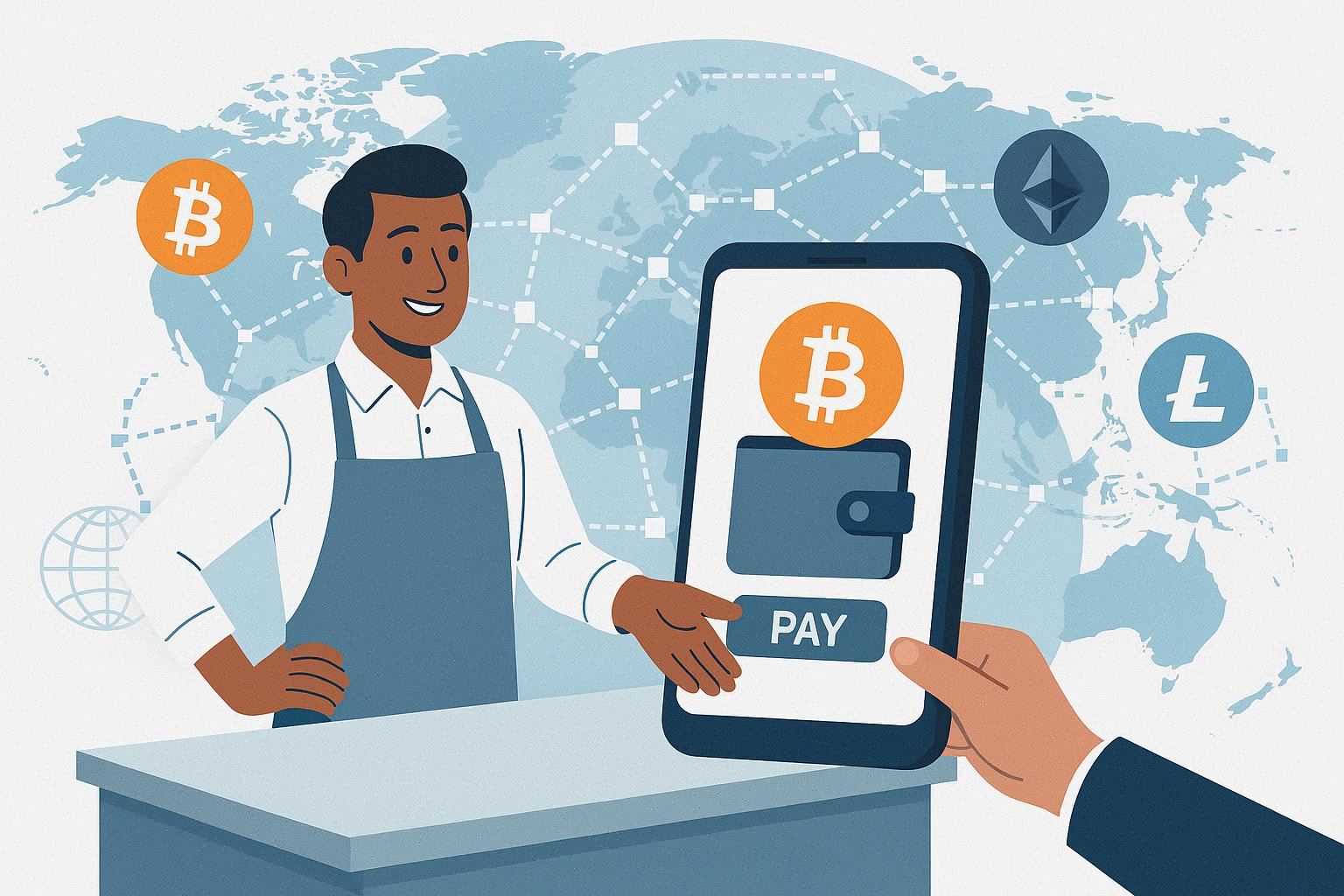
Cryptocurrency has evolved from a niche financial experiment into a globally recognized asset class with significant use cases. One of the most impactful developments in recent years has been the rise of cryptocurrency payment processing. This new frontier is transforming the way businesses and consumers interact with money. It offers benefits such as lower transaction costs, faster cross-border payments, and a more inclusive financial system.
In this article, we will explore the growing importance of cryptocurrency payment processing, how it works, and the potential it holds for businesses in the modern economy.
What is Cryptocurrency Payment Processing?
At its core, cryptocurrency payment processing enables businesses to accept digital currencies as a form of payment for goods and services. Instead of traditional methods like credit or debit cards, bank transfers, or cash, cryptocurrency payments rely on blockchain technology to facilitate transactions. Popular cryptocurrencies, including Bitcoin, Ethereum, and Litecoin, can be used to make payments directly from one party to another, without intermediaries like banks.
A cryptocurrency payment processor acts as an intermediary between the customer and the merchant, providing the necessary infrastructure to accept, convert, and manage cryptocurrency payments. This service simplifies the complexities of accepting digital currencies, allowing businesses to seamlessly integrate cryptocurrency transactions into their existing payment systems.
How Does Cryptocurrency Payment Processing Work?
The process of cryptocurrency payment processing involves several key steps, which, though technical, are becoming easier to manage with the advent of sophisticated tools and services. Here’s a breakdown of how it works:
- Customer Makes a Payment:
The first step is when a customer chooses to pay with cryptocurrency. They can do so by scanning a QR code generated by the merchant’s payment system or entering the wallet address manually. The customer’s wallet then sends the designated cryptocurrency to the merchant’s wallet address. - Payment Verification:
Once the transaction is initiated, it enters the blockchain network for verification. Blockchain is a decentralized ledger that records transactions in a secure and immutable way. Each cryptocurrency has its own blockchain, such as the Bitcoin blockchain or the Ethereum blockchain. These networks use mining or staking mechanisms to validate transactions, ensuring that they are legitimate and preventing double spending. - Processing the Payment:
After verification, the payment is processed by the payment processor. The processor typically converts the cryptocurrency into the local fiat currency (e.g., USD, EUR) or holds it as cryptocurrency, depending on the merchant’s preferences. Some processors offer the option to automatically convert the cryptocurrency into fiat, mitigating any potential volatility associated with cryptocurrency prices. - Confirmation and Settlement:
Once the payment has been confirmed, the funds are either deposited into the merchant’s account in fiat or cryptocurrency, depending on the chosen configuration. This process is much faster than traditional banking methods, with cross-border payments taking mere minutes instead of days.
Why Use Cryptocurrency Payment Processing?
There are several compelling reasons why businesses are increasingly adopting cryptocurrency payment processing:
- Lower Transaction Fees:
Traditional payment methods, such as credit cards and bank transfers, often come with high transaction fees. Cryptocurrency payments, on the other hand, can significantly reduce or eliminate these fees. For businesses, this can lead to substantial savings, especially in high-volume transactions. - Global Reach:
Cryptocurrency operates on a global scale, making it an ideal option for international businesses. Since cryptocurrencies are not bound by borders or regulations of specific countries, merchants can accept payments from customers around the world without the complications of foreign exchange rates or expensive international transfer fees. - Faster Transactions:
Traditional payment systems can take several days to process cross-border payments due to the involvement of multiple intermediaries, such as banks and payment processors. Cryptocurrency payments are much faster, often taking only a few minutes to complete, regardless of the geographic location of the parties involved. - Increased Security:
Cryptocurrencies rely on blockchain technology, which provides a secure and transparent way to record transactions. Each transaction is verified and recorded in a decentralized ledger, making it virtually impossible to alter or forge payments. This level of security is appealing to businesses looking to minimize fraud risks. - Increased Privacy and Anonymity:
For customers who value privacy, cryptocurrency payments offer an additional layer of anonymity. Unlike credit card transactions, which require personal information to be shared, cryptocurrency transactions can often be made with minimal personal data.
The Challenges of Cryptocurrency Payment Processing
While the advantages are clear, cryptocurrency payment processing comes with its own set of challenges:
- Price Volatility:
One of the biggest concerns with cryptocurrency payments is price volatility. The value of cryptocurrencies can fluctuate dramatically over short periods, which can be risky for merchants who may need to convert the cryptocurrency into fiat currency quickly. - Regulatory Uncertainty:
The regulatory landscape surrounding cryptocurrency is still evolving. Different countries have different rules regarding the taxation and use of cryptocurrencies, and businesses must stay informed about the latest regulations to ensure compliance. In some jurisdictions, cryptocurrency payments may be restricted or outright banned. - Technical Barriers:
Although the process of accepting cryptocurrency payments is becoming easier, it still requires a level of technical understanding. Some businesses may struggle with the complexities of setting up a cryptocurrency wallet, integrating payment processors, or managing security. Fortunately, numerous service providers are helping businesses navigate these challenges. - Adoption Rates:
Despite the growing interest in cryptocurrencies, the adoption rate among consumers remains relatively low in comparison to traditional payment methods. For businesses, this means that they must weigh the benefits of offering cryptocurrency payments against the potential for limited usage by customers.
The Future of Cryptocurrency Payment Processing
As cryptocurrencies continue to gain mainstream acceptance, it is likely that cryptocurrency payment processing will become a more integral part of the global financial system. The continued development of blockchain technology, as well as the increasing regulatory clarity in many regions, will likely spur further adoption by businesses and consumers alike.
Innovative solutions, such as stablecoins (cryptocurrencies designed to maintain a stable value) and second-layer scaling solutions (which improve transaction speeds and lower costs), could help address some of the current challenges of cryptocurrency payments. Moreover, advancements in cryptocurrency payment gateways and integrations with existing payment systems are making it easier for businesses to accept digital currencies without major disruptions.
In the long term, cryptocurrency payment processing may offer a more decentralized, efficient, and inclusive financial ecosystem. For businesses looking to stay ahead of the curve, embracing cryptocurrency payments could provide a competitive edge in a rapidly evolving marketplace.
Conclusion
Cryptocurrency payment processing is reshaping the way businesses and consumers interact with money, offering new opportunities for growth and efficiency. While challenges remain, the benefits are undeniable, and the future of cryptocurrency payments looks promising. By understanding how cryptocurrency payments work and the advantages they offer, businesses can make informed decisions about whether to integrate this innovative payment method into their operations.