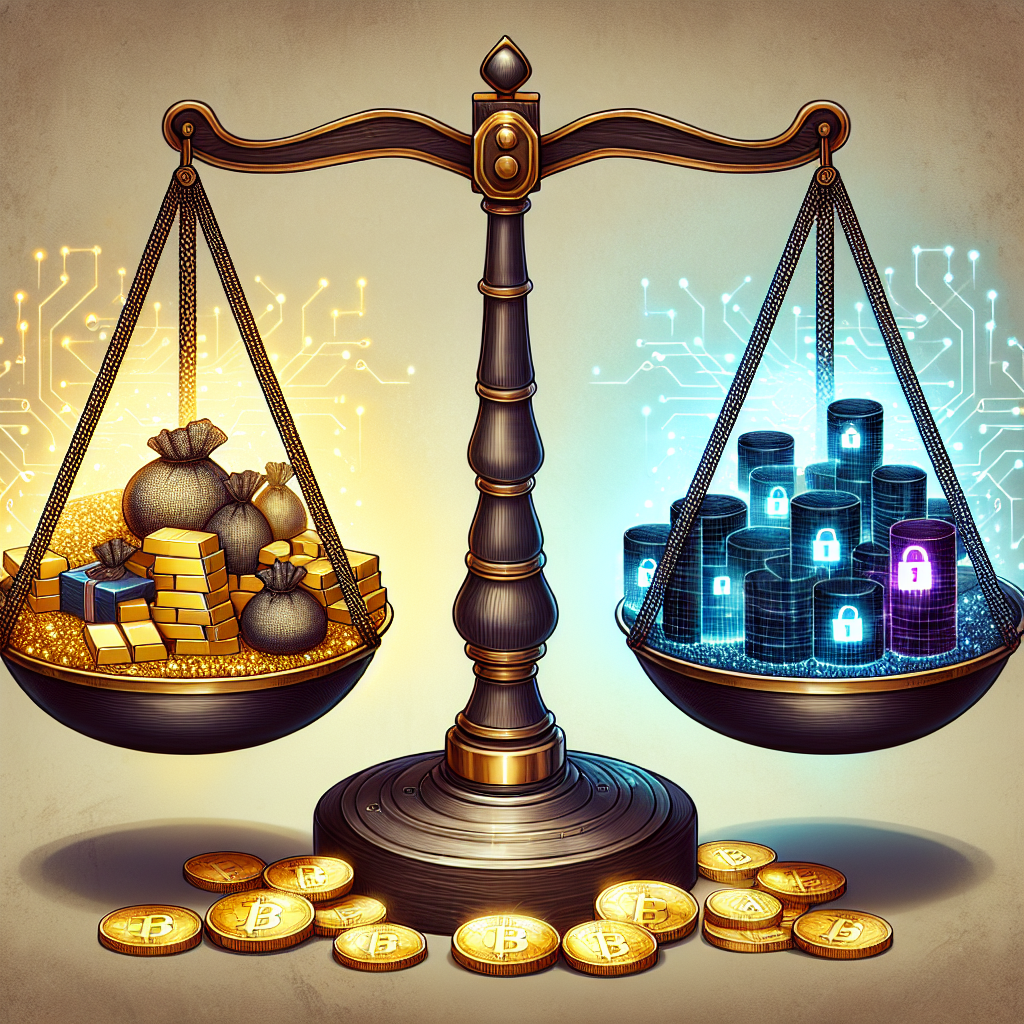
The concepts of “money” and “currency” are often seen as synonymous. However, some theories assert their distinction. While money is considered an abstract idea, currency manifests this notion physically or tangibly.
Money, within this theory, is beyond the senses—untouchable and unscented. On the other hand, currency is its physical embodiment, be it a coin, a banknote, or any tangible representation of monetary value.
Money is fundamentally numerical, while currency takes the form of tangible items such as paper, coins, or modern-day plastic cards like credit or debit. Though the differentiation between money and currency holds relevance in certain scenarios, for the historical exploration here, the terms will be used interchangeably.
The global value of money, whether embodied as a piece of code, a sea shell, or a paper, depends largely on collective human consensus, estimated to be around $432 trillion by the end of 2023. It serves as a unifier for exchanging goods, measuring value, and storing wealth.
The advent of money facilitated indirect trade between individuals, providing a standard valuation and price communication system. It serves as an accounting medium—an accepted benchmark for pricing and transactional credibility. Yet, the form and use of money have continuously transformed through the ages.
Having been a facet of human civilization for about 5,000 years, money in its myriad forms evolved from a presumed barter system—a direct trade of commodities and services. A farmer swapping a bushel of wheat for a pair of shoes with a shoemaker exemplifies such a barter.
Bartering’s direct exchanges, though effective, were often cumbersome—requiring, for instance, the negotiation of an axe trade for a service like mammoth hunting, a complex exchange that necessitated consensus on terms.
Over centuries, a novel currency form was birthed—utilizing items of easy trade, such as animal skins, salt, and weapons. These commodities often functioned as currency themselves, leading to a global barter proliferation that persists in some modern communities.
Efficient transaction speed was among the many boons that monetary adoption brought, revolutionizing the doing of business, from slaying mammoths to constructing monumental edifices.
Fast Fact
The world’s first secure coin minting site dates back to Guanzhuang in China’s Henan Province, where, around 640 BCE, spade coins began as one of the earliest forms of standardized metal coinage.
Simultaneously, in 600 BCE, Lydia witnessed the birth of the first official currency, as King Alyattes endorsed the creation of metal coins—the Lydian stater, employing naturally occurring electrum, a gold-silver alloy stamped with images serving as validation.
By the time Marco Polo journeyed to China in 1271 CE, paper banknotes had replaced metal coins, their issuance regulated around the gold standard established in the 1870s—permitting currency minting proportional to a nation’s gold reserves.
A significant development in North America was Europe’s introduction of paper currency, a necessity owing to the delays in colonial supply shipments. Resultantly, colonial administrations began producing their currency, establishing the first currency market and optimizing currency trading mechanisms.
As digital innovations revolutionize transactions, the modern era witnesses the emergence of virtual currencies, like Bitcoin. Released in 2009 by the pseudonymous Satoshi Nakamoto, Bitcoin, as of August 7, 2024, holds significant value globally, surpassing $1.14 trillion.
Though without physical manifestation, Bitcoin and its digital counterparts such as Ethereum, XRP, and Dogecoin, traded on exchanges, have captured market interest—a testament to their growing acceptance.
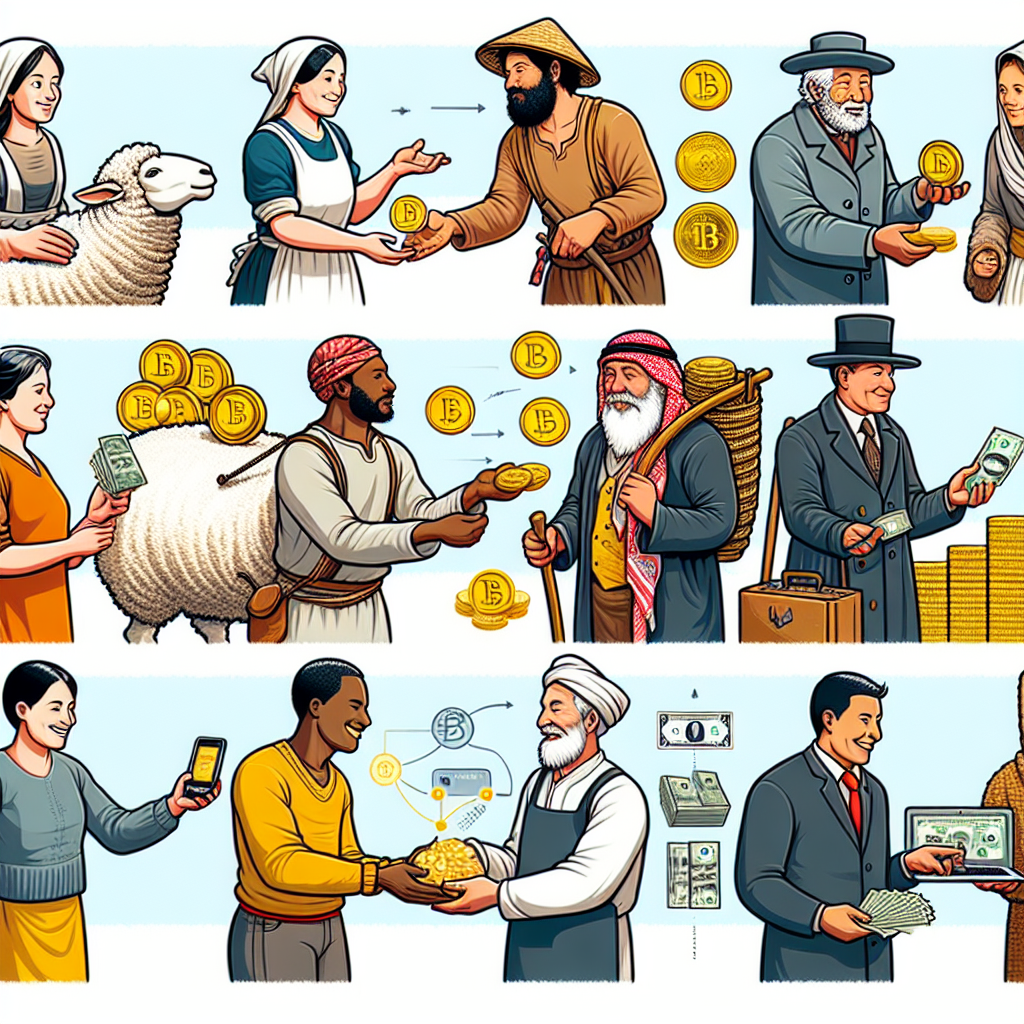
The narrative of money is an ongoing saga, continually adapting from bartering skins to minting coins, transitioning to paper currency, and now, shifting towards a digital realm.
Even as traditional transaction means resurface in B2B exchanges or consumer services, the evolution of the monetary system remains inevitable in addressing humanity’s need for a transactional medium.