Innovative strategies for investing in web 3.0

Innovative Strategies for Investing in Web 3.0

In terms of global connectivity, the internet surpasses any other invention. However, increasing concerns about personal data and privacy highlight the limitations of the internet in its present form. Users are demanding more control over their data, leading to apprehension about how major companies handle and profit from user information. Web 3.0 provides an appealing alternative, empowering users to regain control over their online experiences. This guide offers insights and answers to frequently asked questions for novice investors looking to navigate the Web 3.0 landscape.

Web 3.0 presents a plethora of investment pathways catering to varied risk appetites. Yet, akin to any investment, engaging with Web3 requires comprehensive research and strategic planning due to inherent risks.

Conventional Web3 investments encompass stocks, cryptocurrencies, and NFTs. Lesser-known approaches involve participating in a crypto company’s seed round or acquiring its token pre-launch, thereby investing in a company’s initial phases.

It’s crucial to recognize the narrative-driven nature of Web3 investments. While narratives can offer insights, reliance solely on them can be misleading. Some influencers may promote projects to attract investors and then divest abruptly. Prioritize investments with proven historical performance rather than speculative narratives.

Navigating Web 3.0 Stocks

Stocks present a straightforward entry into Web3, offering partial exposure while being anchored in broader business models. Certain Web2 companies, engaged with Web3, have diversified income streams, minimizing risks associated with Web3’s volatility. Consider these prominent stocks:

Coinbase (COIN): A pivotal entity within the crypto ecosystem, Coinbase is an ideal choice for those venturing into Web3. It not only facilitates crypto-to-fiat conversions but also offers an encompassing NFT-supporting wallet.
Meta (META): Despite its name change from Facebook, Meta remains a significant Web3 player, currently developing Horizon Worlds and Workplace Metaverses to enhance both gaming and professional interactions.
Apple (APPL): Pioneering in AR technology, Apple is developing AR glasses to enhance Metaverse experiences and potentially support third-party app installations, fostering Web3 integration.
X (formerly Twitter): A preferred platform for Web3 discussions, X, backed by Elon Musk’s endorsement of Dogecoin, presents a promising stock. It facilitates NFT integration, enabling personalized NFT profile displays.

Diversifying with Non-Fungible Tokens (NFTs)

Representing unique digital assets on blockchains, NFTs denote ownership and are immutable. Purchase them from platforms like OpenSea or Magic Eden or mint them independently for potential profits.

As versatile Web3 assets, NFTs provide access to exclusive benefits and represent investments in Web3 enterprises.

Exploring Cryptocurrency Investments

Cryptocurrencies, managed by decentralized entities on blockchains, function both as an investment asset and a medium for transactions, offering direct Web 3.0 exposure for aggressive investors.

Given its inherent volatility, cryptocurrency investment suits risk-tolerant individuals. Alternatively, consider safeguarding strategies while maintaining market exposure to minimize volatility impacts.

Understanding Web 3.0’s Promise

Web3’s ethos is rooted in transformative technologies like AI, decentralization, and blockchain, offering investors an opportunity to adopt groundbreaking innovations early on.

The advent of Web3 could redefine fundamental activities—from shopping to digital media consumption. It revolutionizes fundraising for startups, altering traditional capital-raising and revenue models.

Notably, Web3 investments can be highly lucrative, offering substantial returns over shorter durations.

To maximize Web3 investment outcomes, consider these precautions:

  • Utilize secure wallets for digital assets like cryptos and NFTs.
  • Safeguard wallet credentials, refraining from sharing PINs or passwords.
  • Avoid projects lacking transparent online presence and detailed roadmaps.
  • Steer clear of unofficial links or “free giveaways.”

Embarking on a Web3 investment journey without thorough research or a strategic plan can be daunting. Take into account these essential factors before investing:

  • Clarify your investment objectives.
  • Investigate the team steering the project or company.
  • Assess your risk tolerance.
  • Understand Web3 regulations in your jurisdiction.

Post defining your investment ambitions and timeline, familiarize yourself with project founders. Opt for ventures with identifiable founders who can be contacted in case of project complications. Evaluate your risk tolerance and choose legally compliant projects to circumvent regulatory challenges.

Recognizing Web 3.0 Investment Risks

Just like any financial venture, Web 3.0 investments entail potential dangers for investors, encompassing volatility, security breaches, and reliability concerns with existing infrastructures and procedures.

  • Volatility: Web3 asset prices can fluctuate significantly within short spans, impacting portfolios based on timing and market demand.
  • Security: Vulnerabilities like smart contract issues and breaches are prevalent. Opt for projects that have undergone full audits to safeguard investments.
  • Reliability: Web3 investments may not always be reliable. Prioritize projects with tangible real-world applications over mere hype.

High-Risk Tolerance

Engaging with Web 3.0 investments signifies embracing substantial risks. Investors should possess a significant risk appetite, allocating funds they can afford to lose. The inherent volatility of Web 3 assets renders them as unpredictable investments.

Between February 20, 2023, and March 10, 2023, Bitcoin prices oscillated from $24,500 to $19,500, and then to $30,000. Without a substantial risk appetite, there’s a likelihood of premature sell-offs resulting in losses.

High Capital

To realize meaningful returns from Web 3.0 investments, substantial capital allocation is crucial. As it’s advisable to limit Web3 investments to 10% of your entire portfolio, a diversified strategy is essential. Larger capital investments entail greater potential returns and risks. Those with limited capital but a high-risk appetite could explore leveraged assets and futures trading for amplified returns.

Unlocking the secrets of cryptocurrency vulnerabilities

Unlocking the Secrets of Cryptocurrency Vulnerabilities

In search of effortless gains, burglars often look for situations promising quick fortune. While specific conditions make it feasible, hackers can exploit vulnerabilities in cryptocurrency systems, so your cryptocurrency might be pilfered.

What strategies can help you safeguard your cryptocurrency assets?

Cryptocurrency, inherently a decentralized digital asset, relies on cryptographic techniques to secure both transactions and ownership data. A blockchain, essentially a digital ledger, logs these transactions. Although hacking into a blockchain presents myriad challenges due to its foundational principles, opportunities arise for malefactors from weaknesses external to the blockchain.

Cryptocurrency wallets, exchange accounts, or the exchanges themselves can fall prey to hackers. Moreover, scams and ransomware serve as tools for such thefts.

Public ledgers, such as cryptocurrency blockchains, chronicle and authenticate every transaction within the network. Through scripts, automated validation, programming, and encryption, they accomplish this without permitting human alterations. While pseudonymous addresses and transaction amounts remain visible to all, these ledgers autonomously handle submissions and amendments.

Blockchain Security Mechanisms

Blockchain security hinges on consensus mechanics and encryption. Encoding transaction data and linking blocks with encrypted data secures the entire ledger. Newly formed blocks further enhance this security tapestry.

A blockchain cannot traditionally be compromised, where intrusions involve brute force or the introduction of malicious code. Control or modification is not feasible through such means.

Potential Blockchain Assaults

Controlling the majority of a blockchain’s computational power, or its hashrate, could enable an attacker or group of attackers to dominate a blockchain. A 51% control allows them to introduce a modified blockchain, facilitating unverified transactional changes. Although Bitcoin transactions achieve general security post a singular confirmation, six confirmations render them immutable. Without full processing, a 51% assault could reverse transactions.

For example, once a 1 BTC transfer reaches a friend, the initial block confirms it—marking the first confirmation. The subsequent block assimilates this data, gets confirmed, and is sealed—matching the second confirmation. This sequence repeats, entailing four more confirmations for immutability on Bitcoin’s blockchain. A 51% dominance could allow the attacker to manipulate unconfirmed transactions and reroute coins to clandestine addresses as per their programming.

Important

While blockchain networks with fewer participants have faced such breaches, colossal systems like Bitcoin and Ethereum pose an insurmountable challenge for attackers. The exorbitant costs linked to acquiring 51% of the hashrate (BTC) or staked crypto (ETH) deter such attempts effectively.

Wallet Vulnerabilities

Data on a blockchain links cryptocurrency ownership to virtual tokens and keys. Each token pairs with a private key, maintained by the owner or an assigned custodian. A prominent axiom within cryptocurrency circles asserts:

Not your keys, not your coin.

Key storage and private keys themselves form the primary susceptibilities in cryptocurrency. By ceding your keys to another as part of a custodial arrangement, you relinquish control over your cryptocurrency, allowing whoever holds the keys to govern your assets.

Fast Fact

Despite theoretical feasibility, decrypting a private key remains an improbability. An encrypted key represents 2256 possibilities (equivalent to 115 quattuorvigintillion—a 1 succeeded by 75 zeros). Current tech would require centuries or even millennia to successfully decrypt it using brute force.

Often, breaches and theft transpire at the wallet level, where private keys find shelter. These software applications, accessible via mobile devices and computers, house private keys.

Hot and cold delineate wallet types, online connectivity being the differentiator. Exchanges cater to both storage forms, albeit as custodians, retaining keys for users.

Exchange Vulnerabilities

Custodial key holders pose vulnerabilities, notwithstanding the security assurances they provide. Exchanges typically retain cryptocurrency for liquidity alongside numerous customer private keys, creating an enticing lure for cybercriminals.

Without storing private keys on an exchange, they remain unassailable in the event of an exchange hack, ensuring your cryptocurrency’s safety.

Fast Fact

Major exchange breaches make headlines, yet what’s seldom discussed is the…

Notorious among cybercriminal tactics in 2023 were romance scams, wherein impostors assume romantic roles, slowly earning trust, then pleading for cryptocurrency under the guise of emergency needs. Concurrently, ransomware saw a resurgence, encompassing techniques like encrypting data and extorting cryptocurrency or utilizing intimidation unless paid.

By rigorously understanding your key storage methods, their accessibility to you and others, and implementing measures to prevent unauthorized access, you can mitigate the risk of cryptocurrency theft.

Wallets fall into hot, cold, custodial, or non-custodial categories. The least secure are those connected to the internet or another device. Avoid storing keys on devices that possess constant connectivity. Vulnerabilities arise if a connected device or application accesses your keys.

Ignoring advertisements, commercial wallet devices are non-essential, though designed for optimal cryptocurrency key security.

A USB drive with encryption is viable for cold storage, albeit subject to degradation over time. Once linked to another device, it transitions to hot storage until disconnected.

Fast Fact

No indefinitely durable, non-degradable method exists for key storage. Yet, safeguarding keys mirrors the necessity of protecting personal data from unauthorized bank account access. Hence, securing private keys warrants comparable diligence.

Non-custodial cold wallets reign as the most secure. Options range from paper with keys stored securely to encrypted, passkey-reliant devices. Refrain from delegating key storage unless you accept the inherent risks. Only transfer immediately required keys to a hot wallet for transactions, promptly returning them to cold storage thereafter. Maintain cold storage in a stable, connection-free, controlled environment, periodically inspecting devices for degradation. Share private keys with no one and diligently keep current backups.

And remember, “not your keys, not your crypto.”

What Crypto Platforms Face Threats?

Several lesser-known blockchains, like Bitcoin Satoshi Vision (BSV), Bitcoin Gold (BTG), and Ethereum Classic (ETC), have encountered 51% attacks. A more recent case involves a now-insolvent exchange that faced a breach shortly post-bankruptcy declaration in November 2022.

Defining a Crypto Hack

A crypto hack manifests as one of several theft methods leading to cryptocurrency misappropriation.

Bitcoin’s Hack Status

As of May 11, 2024, Bitcoin’s blockchain and network remain impervious to hacks. However, related service providers, applications, and wallets exhibit vulnerabilities and have been compromised before.

Although relatively nascent as a financial medium, cryptocurrencies are primarily convertible, tethered to fiat values, making them appealing targets for thieves. Highly potent networks effectively counteract hackers, rendering them virtually unhackable, unlike their smaller, vulnerable counterparts.

Hackers predominantly target wallets, seeking private keys. Techniques vary, including ransomware implementations. Thus, offline key storage becomes paramount, with transfers only occurring for immediate use. A reputable company or exchange’s wallet might offer supplementary security, as they uphold their reputations by ensuring their software remains updated and free of malicious entries.

The commentary, reflections, and insights shared here serve purely informational purposes. Consult our [insert link] for more information. As of this article’s publication, the author possesses BTC and LTC holdings.

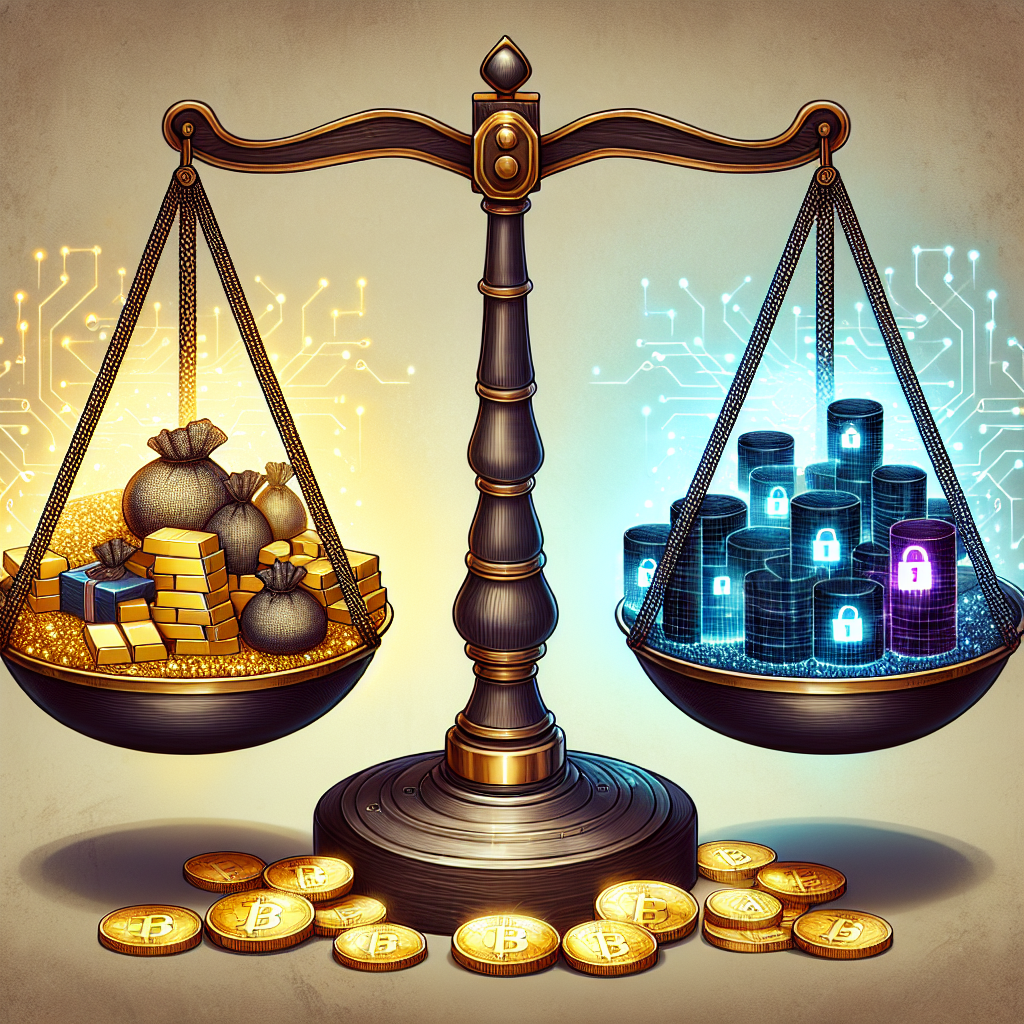
Commodity versus security distinctions, consequences along with the cryptocurrency question

Commodity versus Security – Distinctions, Consequences along with the Cryptocurrency Question

A commodity is a tangible or intangible good that possesses uniform quality across producers and that buyers treat as fully interchangeable. Wheat of a specified protein content, West Texas Intermediate crude oil, 99.9 % pure gold in addition to natural gas measured in British thermal units all fall within this category. Each unit trades at the same quoted price regardless of origin. A security, by contrast, is a negotiable instrument that conveys a financial claim. Common shares of a corporation, municipal bonds, exchange traded notes, and limited-partnership units all qualify. The instrument derives value from the issuer’s promise to pay, distribute profits, or grant control.

Cryptocurrency tokens occupy a contested middle ground. Ether next to similar assets exhibit commodity like interchangeability – one bitcoin equals another bitcoin on every public ledger. Yet certain token offerings grant holders a share of future revenue generated by a software protocol, a structure that resembles a profit sharing agreement. The classification that regulators ultimately adopt will determine which statutes apply, which disclosures must accompany sales, and which intermediaries may lawfully custody the assets.

Hard commodities include crude oil, natural gas, copper cathodes, aluminum ingots, gold bullion, soybeans. Soft commodities comprise cotton bales, coffee beans, cocoa along with sugar. All trade on designated contract markets such as the Chicago Mercantile Exchange, the Intercontinental Exchange, or the London Metal Exchange. Each exchange lists standardized futures contracts that specify grade, quantity, delivery month in addition to delivery point. The Commodity Futures Trading Commission, created in 1974, supervises these markets. Its jurisdiction expanded from agricultural futures to energy, metals next to later to financial derivatives tied to interest rates or equity indices.

Securities regulation rests on the Securities Act of 1933 and the Securities Exchange Act of 1934. The Supreme Court decision SEC v. W. J. Howey Co., 328 U.S. 293 (1946), established a four part test – an investment of money, in a common enterprise, with an expectation of profit, derived solely from the efforts of others. If all four elements are present, the instrument is a security. The Securities but also Exchange Commission enforces registration, disclosure, anti-fraud provisions. Self-regulatory organizations such as the Financial Industry Regulatory Authority supervise broker-dealers and conduct market surveillance.

An issuer that offers securities to the public must file a registration statement containing audited financial statements, risk factors along with a description of the business. Ongoing obligations include quarterly reports on Form 10-Q, annual reports on Form 10-K, and current reports on Form 8-K. These filings must disclose material events within four business days. Failure to comply exposes issuers and underwriters to civil and criminal liability.

The clearest line of separation between commodities and securities lies in the nature of the underlying asset. A commodity transaction conveys ownership of a physical or digital unit. A security transaction conveys a contractual right against an issuer or a pool of assets.

Definition and Nature

Commodities serve as inputs to production or consumption. A refiner purchases crude oil to produce gasoline. A jeweler purchases gold to fabricate rings. Securities serve as claims on future cash flows. A bondholder receives scheduled coupon payments. A shareholder receives dividends when the board declares them. Commodities possess intrinsic utility – securities possess only the rights that the issuer grants.

Regulation and Oversight

The Commodity Futures Trading Commission oversees derivatives markets under the Commodity Exchange Act – it registers futures commission merchants, swap dealers in addition to designated contract markets. The Securities besides Exchange Commission oversees issuance and trading of securities under the Securities Act and the Exchange Act. It registers broker dealers, investment advisers next to national securities exchanges. The two agencies share jurisdiction over security futures, which are contracts on single stocks or narrow based indices.

Trading Markets

Commodities trade primarily through futures contracts on centralized exchanges. A futures contract obligates the seller to deliver and the buyer to accept a specified quantity of the commodity at a predetermined price on a future date. Most contracts close out before delivery through offsetting transactions. Securities trade on stock exchanges or over-the-counter networks. A share purchase conveys immediate ownership of a fractional interest in the issuer’s equity.

Price Determination

Commodity prices respond to physical supply and demand. A drought in the Midwest reduces corn yields and lifts futures prices. A strike at a Chilean copper mine tightens concentrate supply and lifts copper prices. Securities prices respond to expectations of future cash flows discounted at prevailing interest rates. An earnings surprise raises the share price of the reporting company. A central bank rate cut lowers the discount rate and raises equity valuations across the market.

Role in the Economy

Commodities feed, clothe, house, transport populations. Their prices influence inflation indices and central-bank policy. Securities allocate capital from savers to enterprises. A firm that issues shares finances factories, research along with payroll. A municipality that issues bonds finances roads, schools in addition to water systems.

Fast Fact

The classification of a cryptocurrency token depends on the economic realities of the offering, not on the label that promoters assign.

Traditional assets fit neatly into one category or the other. Gold bullion is a commodity. A share of a gold mining company is a security. Digital assets blur the line because software protocols can embed both payment and profit-sharing features.

The outcome of the classification debate will determine which federal agency writes compliance rules, which disclosures accompany token sales, and which intermediaries may lawfully operate in the market.

Cryptocurrencies as Commodities

Industry advocates argue that native protocol tokens such as bitcoin and ether function as digital commodities. Each unit is fungible. No central issuer promises profit. Network participants earn new tokens through computational work or staking collateral. The Commodity Futures Trading Commission has designated bitcoin and ether as commodities under the Commodity Exchange Act. Futures contracts on both assets trade on CME under the oversight of the commission.

Cryptocurrencies as Securities

The Securities or Exchange Commission has asserted jurisdiction over tokens sold in initial coin offerings that meet the Howey test. In 2017 the commission issued the DAO Report – concluding that tokens sold by “The DAO” constituted securities because purchasers invested money in a common enterprise and expected profits from managerial efforts of the sponsor. Subsequent enforcement actions against issuers of tokens such as XRP, LBRY Credits next to ALGO have reinforced the position that profit expectations tied to managerial efforts place the tokens within the statutory definition.

Is Bitcoin a Security or a Commodity?

The Commodity Futures Trading Commission classifies bitcoin as a commodity. The Securities next to Exchange Commission has stated that bitcoin is not a security because no central enterprise underlies the asset and no promoter promises profit. Courts have not ruled definitively on the question, but regulatory practice treats bitcoin as a commodity for derivatives trading and as property for tax purposes.

Why Is a Commodity Not a Security?

Commodities such as crude oil, gold bullion, wheat do not satisfy the Howey test. No promoter offers the commodity as an investment in a common enterprise. No third party undertakes managerial efforts on which purchasers rely for profit. The asset derives value from market supply and demand, not from the success of a discrete enterprise.

Inside kraken: a deep dive into the cryptocurrency exchange's mechanics and distinctiveness

Inside Kraken: A Deep Dive into the Cryptocurrency Exchange’s Mechanics and Distinctiveness

Kraken’s Market Position

Located in San Francisco, Kraken operates as a cryptocurrency exchange where buyers and sellers exchange digital currencies using fiat. By October 2024, it held the seventh spot on CoinMarketCap for both spot and derivatives exchanges, with daily spot and derivatives market volumes averaging approximately $283 million and $217 million, respectively.

Bitcoin (BTC), ether (ETH), EOS (EOS), solana (SOL), as well as non-fungible tokens (NFTs), are available on Kraken. It is also a platform for trading cryptocurrency derivatives and futures.

Kraken stands tall as one of the most enduring and capacious cryptocurrency exchanges, both in the United States and globally.

As a versatile exchange, Kraken brings together spot trading, margin trading, futures trading, over-the-counter trading, staking, perpetuals, and an NFT marketplace, making it a comprehensive hub.

Kraken, akin to other cryptocurrency platforms, has faced challenges in adhering to legal and regulatory standards.

Kraken’s Legal Battle

On November 21, 2023, the SEC initiated legal proceedings against Kraken in court, alleging that the U.S.-based cryptocurrency exchange mixed customer funds with company funds and functioned as an unregistered exchange, clearing agency, and broker-dealer. Kraken sought to have the charges dropped in February 2024, but by August, the court found the lawsuit to have merit, allowing it to go to trial.

Kraken’s Journey

Under the ownership of Payward Inc., Kraken commenced its trading operations in 2013 after being founded in 2011. David Ripley, succeeding co-founder Jesse Powell in 2022, now leads the exchange. Kraken’s mission is to seamlessly bridge the gap between digital wallets and bank accounts for investors seeking to park their bitcoin.

Kraken’s significant strides were showcased in 2016 when it resolved numerous claims from the creditors of Mt. Gox.

As the popularity of virtual currencies surged in 2014, Kraken, along with Coinbase, was chosen to supply BTC market data to Bitcoin price indices on Bloomberg’s terminal. This association with a prominent market data provider catapulted Kraken’s reputation within financial circles, granting Bloomberg users access to prices, charts, news, and cryptocurrency-related social media posts for the first time.

Kraken’s Services Expansion

Following its market data success, Kraken collaborated with TradingView, a financial market chart service provider. Continuously, the platform has incorporated more cryptocurrencies and allowed funding in various currencies, such as the euro, Japanese yen, and the U.S. and Canadian dollars.

The year 2015 marked Kraken’s growth with its introduction of new features favored by both retail investors and professionals. These features included margin trading facilities and dark pools, enabling discreet placement and execution of large orders for pricing benefits.

From 2016 onward, Kraken ventured into derivatives, futures, specialized markets, and expanded beyond U.S. borders. Currently, its reach spans North America, Europe, Asia, and Latin America, except for jurisdictions restricted by regulations. It has secured registrations in the U.S., U.K., Canada, Australia, Italy, Europe, and Abu Dhabi in the U.A.E.

In April 2024, Kraken acquired Tradestation Crypto from the Tradestation Group, an online brokerage service under Japan’s Monex Group Inc. This acquisition of a licensed money transmitter is aimed at bolstering Kraken’s foothold in the U.S.

Kraken’s Comparison with Other Exchanges

With an intuitive interface, round-the-clock customer support, security measures, digital wallets, custodial offerings, a mobile app, and similar trading services and funding options, Kraken competes with platforms like Coinbase and Binance.

Despite this, Kraken’s roster of over 290 cryptocurrencies and 780 trading pairs is less than those of Coinbase or Binance. Furthermore, its transaction fees typically surpass those of its competitors.

Kraken’s offerings include:

Spot Trading: Known as one of the top cryptocurrency spot trading exchanges, Kraken provides an array of trading pairs for typical buying and selling. Margin Trading: Margin trading at Kraken permits borrowing funds to magnify potential profits or losses. Futures Trading: Speculating on future values of select cryptocurrency pairs is possible through futures trading. Over-the-Counter (OTC) Trading: Tailored for high-value transactions, OTC trading caters to institutional investors and wealthy individuals. Staking: Several cryptocurrencies can be staked on Kraken, rewarding users for holding tokens. NFT Marketplace: Users can engage with tokenized digital assets like artwork and collectibles via the NFT marketplace. Application Programming Interface (API): Kraken’s APIs facilitate integration of its services into custom trading applications.

The unpredictability and inherent risks of cryptocurrencies have put Kraken under the microscope, as legal complications may influence its future operations.

New York Legislation and Kraken

In August 2015, Kraken made the choice to leave New York’s market following the introduction of the BitLicense, a regulatory regime for virtual currency businesses. The exchange criticized the BitLicense as excessively burdensome.

Issued by the New York State Department of Financial Services (NYDFS), a BitLicense permits companies to engage in virtual currency business activities within New York. Applicants must disclose detailed information about their operations, financial health, risk management, compliance measures, and undergo a comprehensive background check before approval.

After receiving a BitLicense, a company undergoes continuous NYDFS oversight, with periodic examinations to ensure regulatory compliance. Enforcement actions may be taken against BitLicensees violating regulations.

In September 2018, the New York Attorney General (NYAG) issued a report questioning Kraken’s conduct. The report highlighted deficiencies in customer identity verification, market manipulation prevention, and money laundering protection. Consequently, the exchanges, including Kraken, were referred to the NYDFS for potential state law violations.

Prior to the report’s release, Kraken had declined to cooperate with the fact-finding requests. Post-publication, then-CEO Jesse Powell refuted the allegations, accusing the NYAG of unfairly targeting the crypto industry, likening New York to a “controlling ex.”

Office of Foreign Assets Control

In November 2022, the Office of Foreign Assets Control implicated Kraken in transactions involving Iran.

The OFAC claimed that between October 2015 and June 2019, Kraken processed 826 transactions, totaling about $1.68 million, for individuals purportedly based in Iran, breaching U.S. AML and sanctions prohibiting business with Iranian entities.

Although denying the allegations, Kraken agreed to a settlement with OFAC, paying $362,158.70 and committing to an additional $100,000 investment in sanctions compliance measures.

Securities and Exchange Commission Critique

February 2023 saw the U.S. SEC charge Kraken for not registering its staking-as-a-service offering as a security.

Kraken’s staking program, offering returns resembling dividends, was argued by the SEC to be a security, necessitating registration.

Despite disputing SEC’s claims, Kraken agreed to a $30 million settlement, ceasing its crypto asset staking service.

In November 2023, the SEC renewed legal action against Kraken for allegedly conducting operations as an unregistered exchange, broker, dealer, and clearing agency. This marked the second such action within a year.

Accusations in the November 2023 lawsuit paralleled earlier charges, but additionally, the SEC claimed Kraken’s spot trading platform should have registered as an exchange.

Kraken pushed back against the allegations, insisting that its spot trading platform isn’t an exchange. The exchange filed for dismissal of the case in February 2024, but in August, a federal judge validated the lawsuit’s merits, allowing it to proceed.

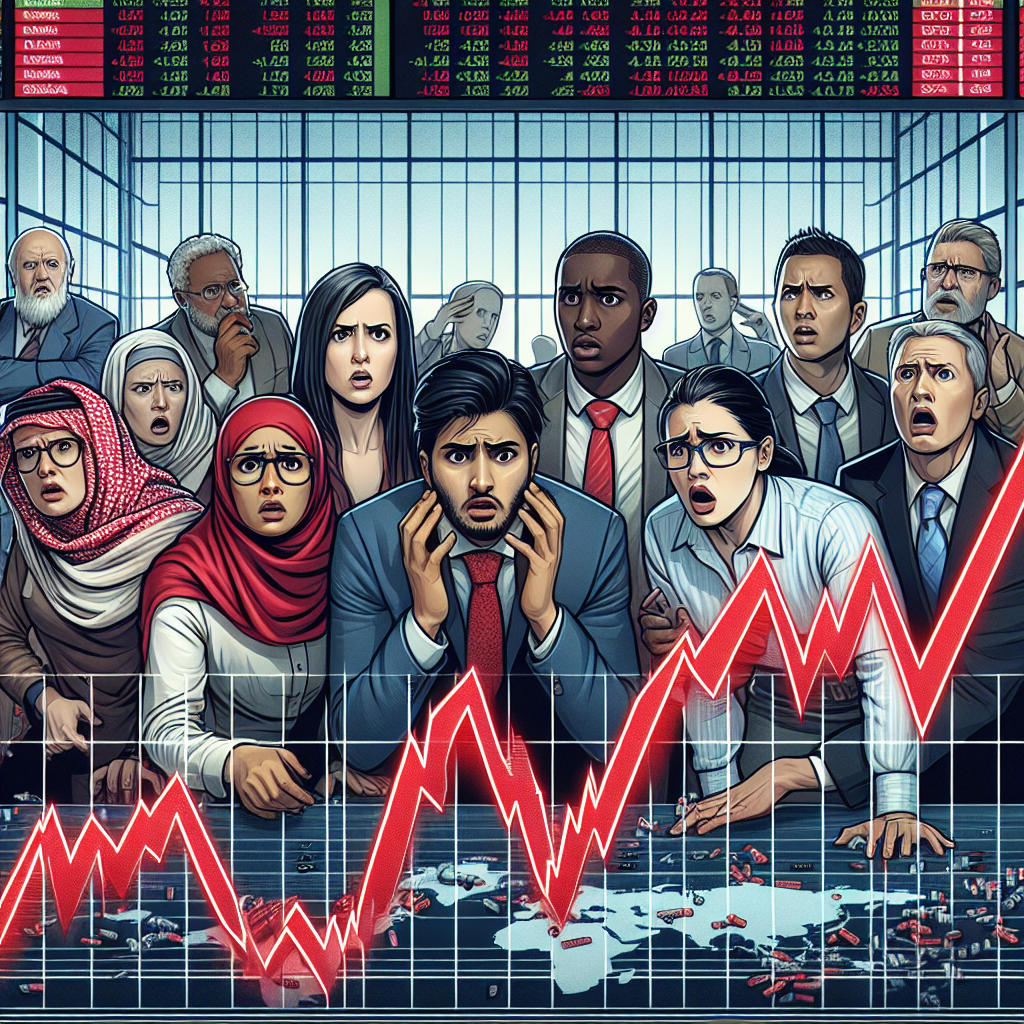
Investors brace for market fallout from u.s. strike on iran nuclear sites

Investors Brace for Market Fallout From U.S. Strike on Iran Nuclear Sites

Investors on Sunday prepared for a flight to safety after the United States struck Iranian nuclear sites late Saturday evening.

President Trump declared in a televised address on Saturday night that Iran’s three principal uranium enrichment plants had been “completely and totally obliterated.” General Dan Caine, chairman of the Joint Chiefs of Staff, told reporters on Sunday that preliminary battle damage reports showed severe structural damage at each location.

Equity markets had remained calm last week as Israel but also Iran traded missile barrages and President Trump weighed direct U.S. participation. Treasury prices rose. Gold prices rose. Mark Spindel, chief investment officer at Potomac River Capital, told Reuters, “Markets will react with alarm.”

Cryptocurrency prices, which trade continuously, signaled a sharp decline for risk assets. Bitcoin fell more than two percent on Sunday morning – dropping below one hundred thousand dollars for the first time since early May. Ethereum dropped more than eight percent.

Wedbush analysts argued in a Sunday note that Monday panic could create a buying opportunity; they wrote that the strike had long appeared inevitable. They described Iran’s nuclear program as the region’s most severe threat. If the attack has rendered that program inoperable, the analysts said, the market will shed a major risk.

U.S. equity futures on Monday could mirror the advance in Middle East shares on Sunday. Investors in Tel Aviv besides Cairo concluded that direct U.S. involvement would shorten the conflict. The Tel Aviv Stock Exchange 35 Index rose 1.5 percent. The Egyptian EGX 30 rose 2.7 percent.

Oil prices are set to surge when crude futures open on U.S. exchanges Sunday evening. The scale of any Iranian reprisal will dictate the extent of the rally. Analysts expect Brent crude to open above ninety dollars per barrel.