Unveiling creative strategies for binary options trading

Unveiling Creative Strategies for Binary Options Trading

Conceptualizing Binary Options

In binary options trading, the essence lies in predicting whether a particular market asset, be it currencies, indices, gold, or other commodities, will exceed or fall short of a predetermined price level known as the strike price. The decision hinges on whether this price will be above or below the mark at expiration.

The heart of binary options trading beats with the pulse of price prediction. When traders anticipate a price increase past the strike price, they opt for a “call,” while a “put” reflects expectations of a dip below this level.

Temporal Flexibility in Options

Binary options offer versatile expirations, from fleeting minutes to extensive weeks. Correct forecasts render a fixed payout, a fraction of the initial investment, while errors lead to a total loss of the venture capital.

Strategic Foundations and Analysis

Strategies for trading binary options can depend on fundamental analysis, which interprets price movements through economic indicators, or technical analysis, where traders predict fluctuations via historical price data and chart formations. These strategies encompass risk management techniques, such as determining optimal trade sizes and implementing stop-loss orders. The strength of these strategies rests in providing traders with a methodical approach to market involvement, facilitating sound decision-making and potentially generating consistent returns, all while curbing the inherent risks of binary options trading.

Instilling clear rules is crucial to evading and mitigating potential losses. This involves deciding how much capital to wager on each trade, setting stop-loss orders, and comprehending the potential risk-reward ratio of each transaction.

Strategizing with Market Insight

The trading process of binary options encompasses a structured analysis of market tendencies, adept risk regulation for protecting investments, meticulous trade execution, and a disciplined approach to decision-making. By assimilating these components, traders can navigate the market with greater efficiency, make informed choices, and enhance their odds of profitable trading while curtailing potential losses.

A particular illustration involving the US 500 Binary is described below. Nadex offers a contract that forecasts the future, utilizing a Nadex computation from the last 25 futures trades preceding contract expiration.

Formulating efficient trading strategies for binary options necessitates comprehension of the market, disciplined execution, and ongoing education. Consider these recommendations:

Regulatory Landscape

Binary options trading has undergone scrutiny by U.S. regulators, who express concerns about prevalent fraud and potential risks to investor protection. Following the debut of the first online binary options trading platform in 2008, these options swiftly became a traded commodity. By early 2017, the Commodity Futures Trading Commission (CFTC) issued statements declaring most binary options trading illicit unless executed on a regulated U.S. exchange.

In the U.S., binary options trade on a few regulated exchanges; however, many such options originate from offshore entities, which remain unregulated and fraught with risk. The Financial Industry Regulatory Authority cautioned investors about non-U.S. companies offering binary options trading platforms, often named to suggest effortless wealth. Wise investment decisions entail steering clear of any entity promising such easy financial success.

Analyzing the Market

Tailored binary options trading strategies are designed to align with varying market circumstances and risk appetites. Aiming to optimize returns within established risk parameters, these strategies assist traders in making enlightened decisions:

Trend Observation Methods: Traders engage in identifying and tracking market tendencies. Spotting successive rises or falls in the market helps ascertain trend strength. Integration of moving averages further aids trading in these scenarios. By aligning bets with the prevailing trend, traders strive to capitalize on market movement continuance. This methodology presupposes that assets steadily moving in one direction will likely continue in that trajectory. Range Negotiation Techniques: In the absence of a discernible direction, trading transpires within set support and resistance levels. Traders base their positions on the likelihood of prices maintaining a specific range, betting correspondingly. Implementing this strategy requires profound market understanding and pinpointing price rebound or breakout junctures. Volatility Maneuvering: Employing volatility strategies centers around the assumption of significant price swings, irrespective of direction. This strategy proves valuable during occurrences like economic or market announcements. Often, options such as boundary or one-touch binary options serve this purpose, where payouts rely on the asset reaching a specified price level. Event-Driven Tactics: Concentration here revolves around news and market happenings. Trades are executed promptly post the release of economic data or news with substantial market or security implications.

Every strategy embodies its own risk profile and entails varying skill sets alongside market awareness. Traders select strategies based on market analysis, risk threshold, and goals.

Transaction Execution Precision

Implementing trade execution pertains to placing buy and sell orders guided by the trader’s analysis and strategy. This demands clarity about entry and exit timing, proficiency in order placement, and a steadfast adherence to strategy sans emotional influence on trade choices.

Mastering Risk and Capital Management

Given the high-risk and high-reward nature, risk management is vital in binary options trading. Effective techniques include position sizing, use of stop losses, trailing stops, limit orders, setting trading caps, and fostering emotional composure.

Emotional Acumen in Binary Trade

Trading in binary options can be demanding, often due to its rapid pace. Emotional intelligence plays a critical role, as traders should refrain from impulsive decisions stemming from fear or greed, maintaining adherence to their trading plan.

Exploring cash app's revenue streams

Exploring Cash App’s Revenue Streams

A key player in the financial technology realm, Block, Inc. (previously Square, Inc.), has made a name for itself with the popular application known as Cash App. This app is just a segment of Block’s vast array of offerings, including software solutions, point-of-sale hardware, and cryptocurrency services.

The company has diversified its business model into enterprise domains like scheduling, employee management, and business analysis, evolving from its initial focus on payment processing since its IPO in November 2015. The company is now one of the most significant payment processors in the United States.

Cash App was introduced by Block (then Square) in 2013 as a competitor to Apple Pay and other services. P2P (peer-to-peer) payment solutions such as these enable consumers to handle transactions effortlessly through their smartphones, allowing them to pay for services and goods, manage bills, and transfer funds to loved ones.

The platform has extended its capabilities beyond merely a P2P payment tool. Users can now receive payments directly and invest in stocks and ETFs without incurring commission fees. Additionally, there is the option to deal with cryptocurrency purchases.

By 2018, Cash App overtook Venmo in the number of times it was downloaded, boasting 33.5 million cumulative downloads. As of September 2023, there were 55 million monthly active users transacting on Cash App, while Venmo had approximately 90 million active accounts.

While downloading Cash App incurs no cost, its core features such as making P2P payments and transferring funds to a bank account remain free of charge.

Apart from transaction fees levied on individuals and businesses, the platform’s income also stems from subscription services and Bitcoin sales to users.

Various charges apply to businesses and customers; for instance, there are fees ranging from 0.5% to 1.75% for instant money withdrawals, diverging from the ordinary free two- to three-day transfers. Transactions utilizing a credit card are subject to a 3% fee.

Included in subscription services are the platform’s financial products like the Cash App Card and the associated expenses and fees for Cash App Instant Deposits.

Cash App’s largest revenue stream arises from its Bitcoin segment. Besides charging a service fee for Bitcoin transactions, the platform capitalizes on the variance, typically between 1% to 4%, in the prices offered by Bitcoin exchanges and buys. This difference enables Cash App to generate extra revenue.

Subscription Services

Cash App’s array of financial products, encompassing the Cash Card and Instant Deposit services, fall under the Subscription Services category. For Q3 2023, this segment reported an impressive $1.04 billion in revenue, marking a substantial 29.48% increase from $803.67 million year over year. This stream forms 29.03% of Cash App’s overall revenue.

Significant Developments

In December 2021, Square, Inc. underwent a rebranding, emerging as Block, Inc., while retaining the “SQ” stock ticker. The Square name will still be synonymous with the company’s Seller business, which integrates commerce solutions, software, and banking services for merchants. Meanwhile, Block will cater to individual consumers, artists, and developers, striving to provide economic empowerment.

A subsidiary of Block, Inc., Cash App categorizes its revenue into three segments: transactions, subscriptions, services, and Bitcoin. With three primary reporting segments—Cash App, Square, and Corporate and Other—Block, Inc. consolidates its financial performance.

During the third quarter, Cash App’s gross profit stood at $983.86 million, reflecting a remarkable 27% boost year over year.

All revenue segments witnessed growth. Transaction-based revenue surged due to an increase in Cash App Business gross payment volume (GPV), driven largely by P2P transactions and payments via credit card. Subscription service revenue expanded with the rising use of Cash App’s financial products, while Bitcoin revenue spiked thanks to increased sales volumes.

Revenue for Cash App is reported by business segment, though income specifics for each segment aren’t disclosed. Broadly, the three categories Cash App focuses on are: transaction-based revenue, subscription-services revenue, and Bitcoin revenue.

The transaction segment, which includes fees from both personal and business P2P transactions, recorded $120.78 million in Q3 2023, expanding by 1.96% from $118.46 million year over year, representing 3.37% of Cash App’s revenue.

Bitcoin

With revenues hitting $2.42 billion in Q3 2023, the Bitcoin segment supersedes others, having grown by 37.49% from $1.76 billion year over year. This segment is responsible for 67.60% of Cash App’s total revenue.

In June 2023, Cash App identified a glitch causing transactional errors that resulted in customers being charged twice for certain Cash Card purchases. The issue was promptly rectified, and customer refunds were processed.

Subsequently in June, the Consumer Financial Protection Bureau (CFPB) cautioned users against storing long-term financial reserves in payment apps, mentioning Cash App, Venmo, and PayPal. It highlighted the potential risk, as these accounts might not be covered by federal insurance from the Federal Deposit Insurance Corporation (FDIC).

Unraveling the web: the intricacies of atm schemes

Unraveling the Web: The Intricacies of ATM Schemes

Over recent decades, ATM scams have evolved, casting a wide net to capture Personal Identification Numbers (PINs) from unsuspecting cardholders. Though diverse in techniques, these scams all rely on the unwitting participation of the victims. Let’s delve into some of the more prevalent methods by which individuals fall prey to ATM frauds.

Common Tactics of ATM Fraud

ATM schemes can involve unauthorized capturing of your debit card numbers or PINs. Criminals employ various strategies, such as placing counterfeit devices on ATM doors for access and installing fake facades on machines. By using advanced cracking software, data can be swiped from standalone ATMs. More traditional tactics include the theft of entire ATM units or setting up deceitful deposit boxes marked as ‘out of order’ on the machines.

One common method involves bank patrons swiping their cards to enter the ATM vestibule. Once inside, their PINs are captured by covert surveillance cameras as they input them on the ATM keypad. With this data, criminals craft a duplicate card to deplete the associated bank accounts swiftly.

Distinguishing genuine devices from fraudulent ones can be challenging due to the multitude of authentic card swiping device manufacturers. Identifying a fake device can be almost insurmountable for a typical user.

Safeguarding Against ATM Deception

If you wish to avoid becoming a victim, make inspecting ATMs a habit to notice any irregularities or unusual devices before using your card. Should the machine or its surroundings appear suspect or show errors after card insertion, do not re-enter your PIN. Report this to your bank immediately. Exercise caution around strangers offering assistance; they may be accomplices to the crime.

Vigilance can thwart these scams. Thoroughly check ATMs for any anomalies before banking. If the ATM location or the machine’s appearance raises suspicions, avoid transactions and inform the bank. Should someone nearby offer unsolicited help, proceed with caution as they might be involved in illicit activities.

Counteracting ATM Mischief

The safety of freestanding ATMs requires scrutiny as they are prime targets for fraudsters. Located in places like airports or gas stations, they are often vulnerable to WiFi scanner programs capable of capturing sensitive transaction data if not protected by robust security software. Conduct a thorough examination of the ATM and avoid using it if any malicious activity is suspected.

The boldest deception involves installing counterfeit machines with sole intent to steal data. Previously a mainstay of organized crime, these ATMs were strategically placed in bustling locations such as small shops or bars. Their sole function was to deceive users into sharing their card details and PINs under the guise of normal transactions, only to deny cash withdrawals.

When encountering ATMs, particularly in crowded settings such as airports or gas stations, exercise caution and avoid dubious-looking machines. Assess their security features, like high-grade encryption software, to guard against hacking. If an ATM behaves erratically, displays errors, or gives any sign of tampering, refrain from using it, and notify the relevant authorities.

Legal Protections and Awareness

Government regulations offer a safety net for ATM users. The Department of Financial Services in New York State, for instance, enforces the ATM Safety Act. This legislation mandates specific safety criteria for ATM facilities under federal and state jurisdiction, ensuring secured usage for consumers.

Ensuring Your Financial Safety

Protection against brazen schemes like ATM robbery is feasible. Opt for machines in well-lit and monitored zones to mitigate risk. Examine ATMs to ensure they are securely fastened to a wall or ground. Should you observe suspicious behavior near the ATM, contact the authorities instead of confronting the suspects yourself.

While the outright theft of ATMs is audacious, this crime focuses on removing cash by physically uprooting the machines. These events often occur overnight in businesses such as supermarkets, where thieves utilize nearby forklifts to disengage ATMs and cart them away. Vigilance and strategic ATM placement are critical deterrents against such theft.

Practical Advice to Avoid Financial Loss

By adopting cautionary habits each time you use an ATM, you can significantly reduce the risk of scams. These habits include examining the ATM’s exterior for unusual attachments, shielding your PIN entry from onlookers, and choosing ATMs in secure, well-lit environments. Regularly reviewing your bank statements for anomalies and activating transaction alerts can also aid in swiftly identifying suspicious activities.

Intriguing Facts about ATMs

In 2025, global ATM installations exceed 3.5 million units. Bitcoin ATMs, equipped with high-level encryption, provide secure means for anonymous digital transactions. Although an idea once floated that inputting a reversed PIN could alert authorities, it has since been debunked as a myth. Ensuring responsible ATM usage can protect against fraud.

Don’t let ATM transactions become a gateway for thieves. Trust your instincts, stay alert for irregular situations, and always shield the keypad when entering your PIN—it spares you the distress of a preventable crime. If you witness fraudulent activity, notify the authorities promptly and let them handle the situation.

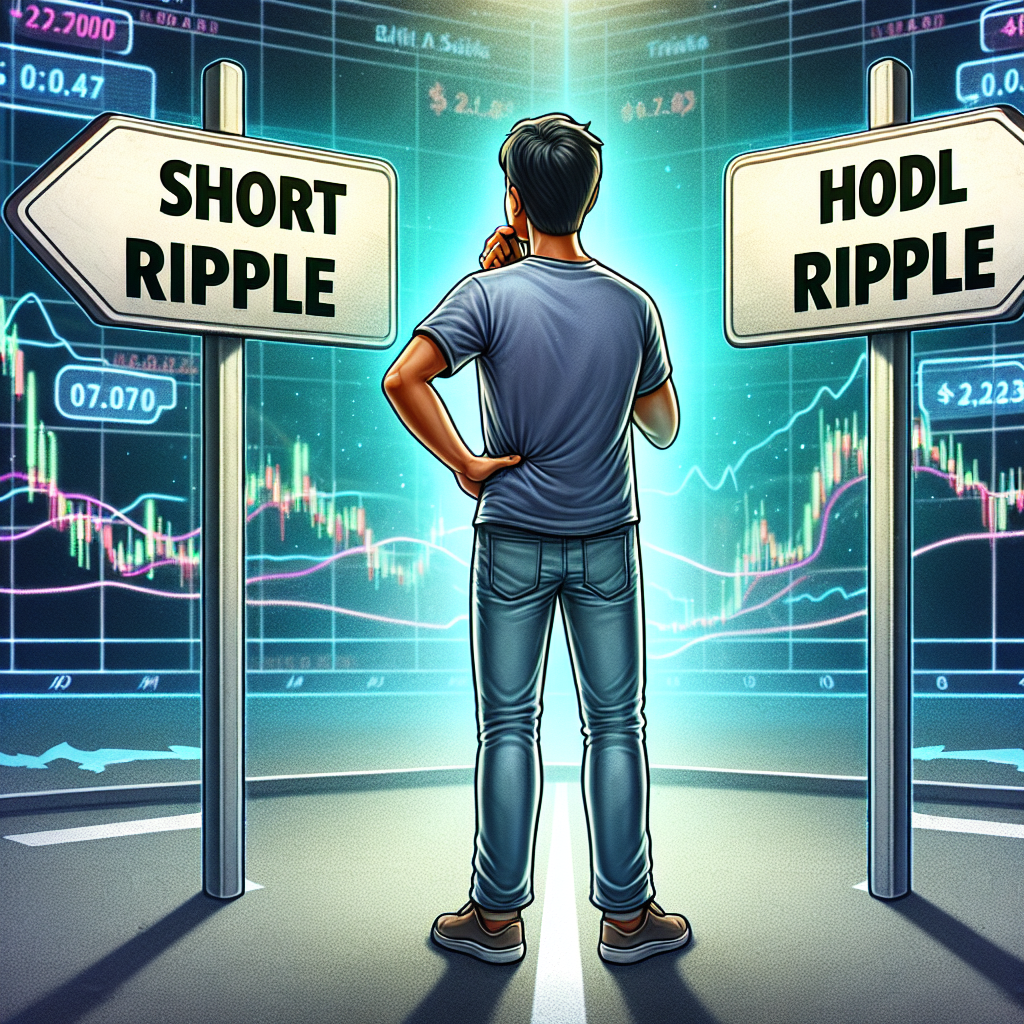
Should you short ripple?

Should You Short Ripple?

A market consists of buyers and sellers who exchange a good or service. On modern electronic exchanges, continuous two sided quotations from market makers supply liquidity. The practice of short-selling – borrowing an asset – selling it – repurchasing it later at a lower price, and returning it to the lender – accelerates price discovery. Cryptocurrency venues have begun to list short contracts – adding depth to order books that once thinned without warning.

Rapid appreciation tempts speculators to construct bearish theses, yet short exposure remains hazardous. Conceived to let banks settle cross border payments at reduced cost, now trades at prices that reflect speculative inflows rather than utility metrics. The token’s utility does not guarantee perpetual appreciation. Short positions profit only if price falls, and that outcome is uncertain.

Exchanges list Ripple against the dollar, against bitcoin along with against ether. Traders who judge the token overpriced borrow it, sell it in addition to hope to repurchase it later at a discount. Centralization underpins the bear case. Ripple Labs controls validation nodes, publishes code releases, and holds the majority of tokens. Critics argue that a single entity with concentrated holdings can suppress price or, conversely, withhold supply to support it. Either scenario complicates risk management for shorts.

Supply mechanics differ from those of proof-of-work coins. No mining adds new XRP. The protocol created one hundred billion units at launch. Fifty-five billion sit in time locked smart contracts that release one billion on the first of each month. The predictable drip enlarges tradable float by roughly three percent annually. If demand stalls, the extra supply depresses price, a tailwind for shorts.

Each on chain transfer incurs a fee of ten drops – one hundred thousandth of a unit. The protocol destroys the fee – shrinking outstanding supply. At the current burn rate, the chain erases about twelve million XRP per year. The schedule accelerates with transaction volume. A sustained surge in bank adoption could offset the monthly unlocks – nullifying the bearish supply narrative.

Mati Greenspan, senior market analyst at eToro, separates the company from the token: “Ripple Labs licenses payment software to banks. The software routes dollars, euros, yen, or any other balance. Settlement occurs on a private ledger. The public XRP ledger functions as a back up rail. Most corridors do not use XRP. Traders who treat the token as equity in Ripple Labs misunderstand its role.”

Greenspan adds: “A bank that moves one million dollars through the public ledger pays a fee in XRP. The fee vanishes. New partnerships rarely touch the public ledger – the burn rate stays modest. One hundred billion initial units dwindle at a glacial pace. Price pressure from shrinking supply competes with pressure from monthly releases. The net effect is ambiguous.”

Short sellers face structural constraints. Profit equals the distance from entry price to zero. Losses have no ceiling. A short entered at one dollar faces a maximum gain of one dollar per token. A spike to ten dollars inflicts a nine dollar loss. Intraday moves of twenty percent occur weekly. Exchanges require margin deposits that vary with volatility. A forced liquidation during a squeeze crystallizes losses before the thesis plays out.

Day traders who target brief pullbacks sometimes profit; they post collateral, borrow XRP, sell it, set tight stop loss orders, and repurchase within hours. The tactic demands continuous screen presence and disciplined sizing. Overnight or longer horizons expose the position to headline risk. A single press release announcing a new bank consortium can gap price thirty percent against the short.

The deflationary burn schedule undermines long term shorts. Each transfer chips away at supply. If banks eventually migrate volume to the public ledger, the burn rate could exceed the monthly unlock. Price would rise even absent speculative inflows. A short held for months or years fights a protocol level buyback program funded by transaction fees.

Ripple Labs holds forty eight billion tokens in escrow and seven billion in operating wallets. The company discloses sales schedules quarterly. A sudden acceleration of programmatic sales floods the market. A suspension of sales tightens float. Neither action is predictable. Short sellers who rely on transparent supply schedules must price in the possibility of abrupt changes.

Regulatory rulings add another layer of risk. The Securities but also Exchange Commission filed suit against Ripple Labs in December 2020 – alleging that XRP is an unregistered security. Courts have issued mixed opinions. A final judgment that classifies the token as a security would restrict U.S. trading venues. Liquidity would fragment. Price could collapse or, paradoxically, spike if shorts rush to cover in thin order books.

Exchange counterparty risk is non trivial. Few venues offer insured custody for borrowed tokens. A hack or insolvency traps collateral and forces the short seller to repay the loan at market price. During the 2022 FTX collapse, XRP shorts on that platform lost access to margin balances and faced claims in bankruptcy court denominated in U.S. dollars at petition date prices.

Technical indicators provide mixed signals. The Relative Strength Index prints above seventy on daily charts, a level that preceded pullbacks in prior cycles. Yet the Moving Average Convergence Divergence histogram shows bullish momentum. Volume surges coincide with news releases rather than sustained accumulation. Chart patterns form wedges that resolve in either direction with equal probability.

Funding rates on perpetual futures reveal sentiment. A negative rate means shorts pay longs – indicating crowded bearish bets. A positive rate means longs pay shorts – suggesting bullish leverage. Rates flip sign within hours – reflecting rapid rotation. Traders who enter shorts when funding is deeply negative risk paying punitive interest if the crowd reverses.

Correlation with bitcoin remains high. During risk off episodes, altcoins underperform the dominant cryptocurrency. A short XRP position therefore doubles as a bet that bitcoin falls. If macro conditions shift and bitcoin rallies, XRP often follows with amplified beta. The hedge ratio drifts – complicating portfolio risk calculations.

Options markets offer alternative structures. Put spreads limit downside risk to the premium paid. Calendar spreads sell near dated calls and buy longer dated ones – capturing decay if rallies stall. Implied volatility trades at a premium to realized volatility – option sellers harvest theta. Liquidity concentrates at strikes within twenty percent of spot – leaving wider strikes with wide bid ask spreads.

Tax treatment varies by jurisdiction. In the United States, short sales generate ordinary income or short term capital gains, taxed at marginal rates. Losses offset gains without limit, but wash sale rules do not apply to cryptocurrencies – allowing immediate re entry. Traders must track cost basis across multiple exchanges and wallets, a task complicated by airdrops and hard forks.

Psychological factors weigh on decision making. Social media sentiment oscillates between euphoria and despair within days. Telegram channels coordinate pump attempts. Reddit threads dissect wallet flows. Noise drowns signal. A disciplined trader sets predefined entry and exit rules, logs each trade next to reviews performance weekly. Emotional trades erode edge faster than adverse moves.

Liquidity on decentralized exchanges is thin. Automated market makers quote XRP against wrapped ether or stablecoins. Slippage exceeds five percent for orders above fifty thousand dollars. Arbitrage bots bridge centralized and decentralized venues, but latency arbitrage is capital intensive. A short seller who needs to repurchase tokens on a decentralized pool faces price impact that dwarfs the profit target.

Network congestion is rare but costly. During the 2021 flare up, transaction fees spiked to one hundred drops, ten times the norm. Exchanges paused withdrawals. Short sellers who relied on on chain settlement faced delays. Cross-exchange arbitrageurs widened spreads. The episode lasted six hours, yet mark-to-market losses triggered liquidations for leveraged shorts.

Historical drawdowns offer context. From January 2018 to August 2018, price fell ninety three percent. From November 2020 to April 2021, price rose fourteen hundred percent. Both moves occurred within six months. A short position entered at the 2018 peak returned nine hundred percent by the trough. A short entered at the 2021 peak lost seven hundred percent by the subsequent trough. Timing dominates outcome.

Institutional flows provide a counterweight. Grayscale’s XRP Trust trades at a premium to net asset value when retail demand surges. Arbitrageurs create shares by depositing tokens – sell the trust on over-the-counter markets. The mechanism absorbs float and supports price. A closure of the trust or a regulatory ban on new creations would reverse the flow.

The decision to short Ripple hinges on horizon, risk tolerance, information edge. Day traders who monitor order flow – funding rates, and news feeds exploit intraday reversals. Swing traders who rely on chart patterns and sentiment metrics hold for days or weeks. Position traders who ignore token burns and regulatory overhang face asymmetric risk. Each cohort requires distinct sizing, stop loss levels along with contingency plans.

Investing in cryptocurrencies and other digital tokens is speculative. This article does not constitute investment advice. Consult a qualified financial professional before entering any position.

Inside kraken: a deep dive into the cryptocurrency exchange's mechanics and distinctiveness

Inside Kraken: A Deep Dive into the Cryptocurrency Exchange’s Mechanics and Distinctiveness

Kraken’s Market Position

Located in San Francisco, Kraken operates as a cryptocurrency exchange where buyers and sellers exchange digital currencies using fiat. By October 2024, it held the seventh spot on CoinMarketCap for both spot and derivatives exchanges, with daily spot and derivatives market volumes averaging approximately $283 million and $217 million, respectively.

Bitcoin (BTC), ether (ETH), EOS (EOS), solana (SOL), as well as non-fungible tokens (NFTs), are available on Kraken. It is also a platform for trading cryptocurrency derivatives and futures.

Kraken stands tall as one of the most enduring and capacious cryptocurrency exchanges, both in the United States and globally.

As a versatile exchange, Kraken brings together spot trading, margin trading, futures trading, over-the-counter trading, staking, perpetuals, and an NFT marketplace, making it a comprehensive hub.

Kraken, akin to other cryptocurrency platforms, has faced challenges in adhering to legal and regulatory standards.

Kraken’s Legal Battle

On November 21, 2023, the SEC initiated legal proceedings against Kraken in court, alleging that the U.S.-based cryptocurrency exchange mixed customer funds with company funds and functioned as an unregistered exchange, clearing agency, and broker-dealer. Kraken sought to have the charges dropped in February 2024, but by August, the court found the lawsuit to have merit, allowing it to go to trial.

Kraken’s Journey

Under the ownership of Payward Inc., Kraken commenced its trading operations in 2013 after being founded in 2011. David Ripley, succeeding co-founder Jesse Powell in 2022, now leads the exchange. Kraken’s mission is to seamlessly bridge the gap between digital wallets and bank accounts for investors seeking to park their bitcoin.

Kraken’s significant strides were showcased in 2016 when it resolved numerous claims from the creditors of Mt. Gox.

As the popularity of virtual currencies surged in 2014, Kraken, along with Coinbase, was chosen to supply BTC market data to Bitcoin price indices on Bloomberg’s terminal. This association with a prominent market data provider catapulted Kraken’s reputation within financial circles, granting Bloomberg users access to prices, charts, news, and cryptocurrency-related social media posts for the first time.

Kraken’s Services Expansion

Following its market data success, Kraken collaborated with TradingView, a financial market chart service provider. Continuously, the platform has incorporated more cryptocurrencies and allowed funding in various currencies, such as the euro, Japanese yen, and the U.S. and Canadian dollars.

The year 2015 marked Kraken’s growth with its introduction of new features favored by both retail investors and professionals. These features included margin trading facilities and dark pools, enabling discreet placement and execution of large orders for pricing benefits.

From 2016 onward, Kraken ventured into derivatives, futures, specialized markets, and expanded beyond U.S. borders. Currently, its reach spans North America, Europe, Asia, and Latin America, except for jurisdictions restricted by regulations. It has secured registrations in the U.S., U.K., Canada, Australia, Italy, Europe, and Abu Dhabi in the U.A.E.

In April 2024, Kraken acquired Tradestation Crypto from the Tradestation Group, an online brokerage service under Japan’s Monex Group Inc. This acquisition of a licensed money transmitter is aimed at bolstering Kraken’s foothold in the U.S.

Kraken’s Comparison with Other Exchanges

With an intuitive interface, round-the-clock customer support, security measures, digital wallets, custodial offerings, a mobile app, and similar trading services and funding options, Kraken competes with platforms like Coinbase and Binance.

Despite this, Kraken’s roster of over 290 cryptocurrencies and 780 trading pairs is less than those of Coinbase or Binance. Furthermore, its transaction fees typically surpass those of its competitors.

Kraken’s offerings include:

Spot Trading: Known as one of the top cryptocurrency spot trading exchanges, Kraken provides an array of trading pairs for typical buying and selling. Margin Trading: Margin trading at Kraken permits borrowing funds to magnify potential profits or losses. Futures Trading: Speculating on future values of select cryptocurrency pairs is possible through futures trading. Over-the-Counter (OTC) Trading: Tailored for high-value transactions, OTC trading caters to institutional investors and wealthy individuals. Staking: Several cryptocurrencies can be staked on Kraken, rewarding users for holding tokens. NFT Marketplace: Users can engage with tokenized digital assets like artwork and collectibles via the NFT marketplace. Application Programming Interface (API): Kraken’s APIs facilitate integration of its services into custom trading applications.

The unpredictability and inherent risks of cryptocurrencies have put Kraken under the microscope, as legal complications may influence its future operations.

New York Legislation and Kraken

In August 2015, Kraken made the choice to leave New York’s market following the introduction of the BitLicense, a regulatory regime for virtual currency businesses. The exchange criticized the BitLicense as excessively burdensome.

Issued by the New York State Department of Financial Services (NYDFS), a BitLicense permits companies to engage in virtual currency business activities within New York. Applicants must disclose detailed information about their operations, financial health, risk management, compliance measures, and undergo a comprehensive background check before approval.

After receiving a BitLicense, a company undergoes continuous NYDFS oversight, with periodic examinations to ensure regulatory compliance. Enforcement actions may be taken against BitLicensees violating regulations.

In September 2018, the New York Attorney General (NYAG) issued a report questioning Kraken’s conduct. The report highlighted deficiencies in customer identity verification, market manipulation prevention, and money laundering protection. Consequently, the exchanges, including Kraken, were referred to the NYDFS for potential state law violations.

Prior to the report’s release, Kraken had declined to cooperate with the fact-finding requests. Post-publication, then-CEO Jesse Powell refuted the allegations, accusing the NYAG of unfairly targeting the crypto industry, likening New York to a “controlling ex.”

Office of Foreign Assets Control

In November 2022, the Office of Foreign Assets Control implicated Kraken in transactions involving Iran.

The OFAC claimed that between October 2015 and June 2019, Kraken processed 826 transactions, totaling about $1.68 million, for individuals purportedly based in Iran, breaching U.S. AML and sanctions prohibiting business with Iranian entities.

Although denying the allegations, Kraken agreed to a settlement with OFAC, paying $362,158.70 and committing to an additional $100,000 investment in sanctions compliance measures.

Securities and Exchange Commission Critique

February 2023 saw the U.S. SEC charge Kraken for not registering its staking-as-a-service offering as a security.

Kraken’s staking program, offering returns resembling dividends, was argued by the SEC to be a security, necessitating registration.

Despite disputing SEC’s claims, Kraken agreed to a $30 million settlement, ceasing its crypto asset staking service.

In November 2023, the SEC renewed legal action against Kraken for allegedly conducting operations as an unregistered exchange, broker, dealer, and clearing agency. This marked the second such action within a year.

Accusations in the November 2023 lawsuit paralleled earlier charges, but additionally, the SEC claimed Kraken’s spot trading platform should have registered as an exchange.

Kraken pushed back against the allegations, insisting that its spot trading platform isn’t an exchange. The exchange filed for dismissal of the case in February 2024, but in August, a federal judge validated the lawsuit’s merits, allowing it to proceed.